

Expand Indonesian Business to Singapore: Opportunities & Risks
Overview
- Indonesian brands such as Sociolla, Kenangan Coffee, Fore Coffee, Traveloka and Restoran Sederhana already operate in Singapore, and Sociolla has Singapore on its list of future markets.
- Singapore gives you new customers, a strong international image, regional partners and a launch pad into other Asian markets.
- The biggest hurdles are high rent and wages, tough competition, licences, hiring rules and tax filings.
- A foreign-owned Singapore company needs at least one Singapore-resident director, a local registered address and a company secretary within six months. Government fees are S$315 and the minimum paid-up capital is S$1.
- Corporate tax is a flat 17%, with relief for new companies. GST is 9% once taxable turnover passes S$1 million.
- Start small with one outlet, one pilot or one local partner before you commit large sums.
- Bizsquare can handle setting up a company in Singapore, the company secretary role, bookkeeping and tax filing from one team.
Picture a Tuesday morning at Raffles City in Singapore. A commuter orders a Kenangan Latte made with palm sugar from Java. A few streets away in Kampong Glam, a family sits down to a plate of rendang at Restoran Sederhana. Meanwhile, a tech team at Traveloka’s Singapore office builds tools that travellers across Southeast Asia will use next month.
Three different businesses share one story. Each one is Indonesian, and each one decided Singapore was worth the effort.
If you run a business in Jakarta, Surabaya, Bandung or Medan, you may be asking whether you should expand your Indonesian business to Singapore too. This guide answers that question in plain language. First, we look at why the big names went. Next, we cover the opportunities and the challenges. Finally, we give you a step-by-step plan you can follow at your own pace.

Why Are Indonesian Businesses Expanding into Singapore?
Indonesian businesses expand into Singapore because the city offers high-spending, multicultural customers, a trusted global reputation, strong partners and investors, and an easy base for reaching other Asian markets. In practice, Singapore works as a test market and a regional hub at the same time.
Singapore is less than two hours from Jakarta by air, so your team can visit, learn and return within a day. In addition, the country welcomes foreign owners and keeps its rules clear and predictable. That combination makes Singapore market entry less scary than moving into a country you do not know.
The founders say it themselves. Kopi Kenangan’s CEO told CNBC that Singapore and Malaysia are a stepping stone toward many more countries. Fore Coffee’s CEO called Singapore the “Central Business District” of Southeast Asia in an interview with Vulcan Post. Traveloka, for its part, told Singapore’s Economic Development Board that its Singapore office gives it access to a world-class tech talent pool.
Which Indonesian Brands Are Already in Singapore?
Here is a quick snapshot. Each of these Indonesian businesses in Singapore took a different route, so you can match your own plan to the one that fits best.
| Brand | Sector | What it did in Singapore | Lesson for you |
| Kenangan Coffee (Kopi Kenangan) | Coffee | First outlet at Raffles City in September 2023, plus a Singapore head office and barista academy | Train staff early and price for Singapore |
| Fore Coffee | Coffee | First overseas outlet at Bugis Junction on 9 November 2023 | Master one foreign market first |
| Traveloka | Travel and lifestyle app | Singapore office for tech talent, partners and product testing | Use Singapore as a regional hub |
| Restoran Sederhana | Padang restaurant | Kampong Glam outlet, soft opening 29 May 2026, official launch 14 June 2026 | Soft launch first, then scale |
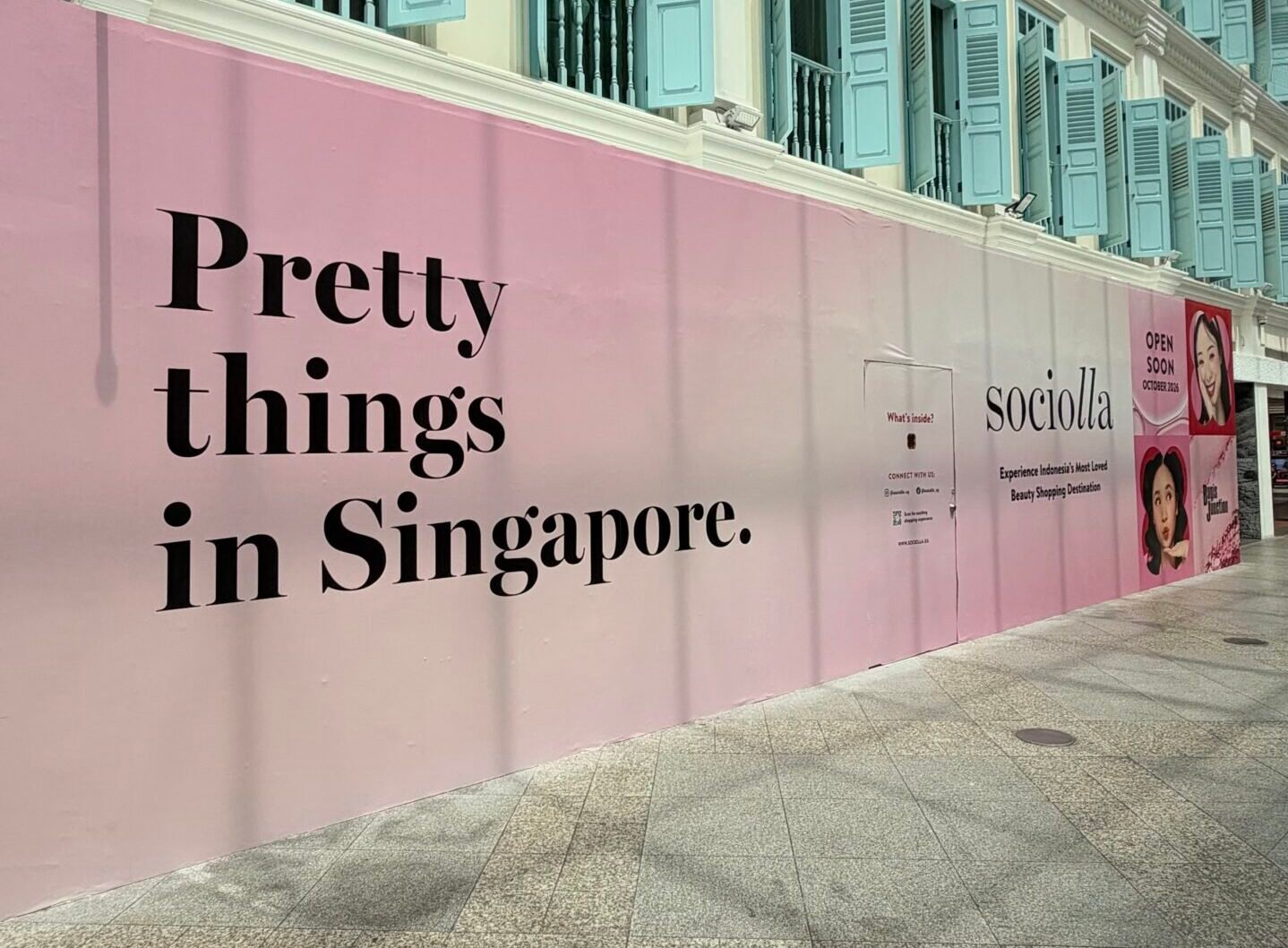
| Sociolla | Beauty retail | Vietnam since 2020, reportedly eyeing Singapore next | Build a strong home base first |
Kenangan Coffee: train first, then open the doors
Kenangan Coffee, known as Kopi Kenangan at home, opened its first Singapore outlet at Raffles City in September 2023. Before that, it set up a Singapore head office and a training academy and hired baristas locally. Its Singapore drinks cost between S$3.90 and S$7.90, while coffee at home starts around S$1.30. The brand did not copy its Indonesian price tag. It priced for Singapore and kept the Indonesian flavour, such as palm sugar, as its hook.
Fore Coffee: one market, done well
Fore Coffee opened its first overseas outlet at Bugis Junction and sold almost 3,000 cups in its first weekend. Menu prices start at S$4.50, and customers can adjust sugar levels and choose their milk. More than a year later, the CEO told The Jakarta Post that sales kept rising and that overseas plans stayed focused on Singapore. That patience makes sense, because Fore had to close about half its outlets during COVID-19 and then slowed down to study its customers.
Traveloka: a hub for talent and testing
Traveloka shows that you do not need a shop to benefit from Singapore. Its Singapore teams work on data science, cybersecurity and cloud systems. The company also launched Traveloka Xperience in Indonesia and Singapore first, which let it test the service before it rolled out elsewhere, according to the EDB article.
Restoran Sederhana: soft launch, then celebrate
Restoran Sederhana started in 1972 and now has nearly 200 outlets. Its Singapore branch at 738 North Bridge Road opened softly on 29 May 2026 and held its official launch on 14 June 2026. Local media also profiled a Singaporean entrepreneur involved in the outlet, which hints at another smart route: work with someone who already knows the neighbourhood.
Sociolla: the one to watch
Sociolla now runs more than 180 stores across over 65 Indonesian cities. It entered Vietnam in 2020 and has reportedly named Thailand, the Philippines, Malaysia and Singapore as next targets. Singapore investors such as Temasek already back the company. We could not confirm a Singapore store yet, so treat Sociolla as a plan in progress, not a finished case study.
What Opportunities Does Singapore Offer Indonesian Businesses?
Singapore offers four main Singapore business opportunities for Indonesian companies: new customers, international brand exposure, regional partnerships and a springboard to other markets. Let us look at each one.
1. Access to new customers
Singapore has a small population, but its people spend well, travel often and enjoy trying new things. Kenangan Coffee’s team also pointed to the city’s multicultural mix as an ideal testing ground for global appeal. Tourists, office workers and the Indonesian community add even more footfall. Notice that Kenangan opened a second outlet at Changi Airport, where travellers from all over the region pass through every day.
2. International brand exposure
A Singapore address tells buyers, banks and investors abroad that you meet high standards. Moreover, the local and regional press covers new arrivals. Mothership, CNA, CNBC and several food blogs all wrote about the Indonesian coffee openings, which gave those brands attention that would cost a lot to buy through advertising.
3. Regional partnerships
Singapore hosts regional offices of many global companies, along with investors, banks and logistics firms. Traveloka’s president said Singapore lets the company network with high-quality strategic partners. As a result, a single meeting in Singapore can lead to distributors, franchisees or investors in several countries. Agencies such as Enterprise Singapore and the Economic Development Board also publish useful guidance for foreign companies.
4. A springboard into other markets
Kenangan went to Malaysia first, then Singapore, and says it wants many more countries. Sociolla chose Vietnam first and now looks at the region. A Singapore company can hold contracts, brand rights and staff for your wider Indonesia to Singapore business expansion plan. Singapore also allows 100% foreign ownership, taxes companies at a flat 17%, and keeps company paperwork mostly online.
What Challenges Should You Expect When Entering Singapore?
The opportunities are real, but so are the hurdles. Here are the seven that matter most, together with a practical response to each.
1. Operating costs
Rent, wages and utilities cost far more than in most Indonesian cities. That is why Kenangan’s Singapore menu starts at about three times its home price. Fix: rebuild your numbers in Singapore dollars from zero. Do not assume that your Indonesian cost structure will survive the trip.
2. Strong competition
Singapore welcomes the world, so you face global rivals. CNBC reported that Luckin Coffee opened about 30 outlets within months, while Kenangan, Tim Hortons, Fore and Louisa also arrived. In the same report, analysts noted that brands rarely grow very large in Singapore because the country is small. Fix: decide in advance what makes you different, and treat Singapore as a base for learning and for regional growth, not only a profit engine.
3. Licensing
Many industries need a licence before you open. A café or restaurant needs a Food Shop Licence from the Singapore Food Agency, and you apply through the government’s GoBusiness portal. The licence lasts one year, and you can only start trading after approval and payment. If you employ foreign workers, the licence belongs in the company’s name. Halal certification, which many Indonesian brands want, follows a separate process after the food licence. Fix: map your licences first, because they set your opening date.
4. Company incorporation
Setting up a company in Singapore is quick, but it has rules. You need a director who lives in Singapore, a local registered address and a company secretary. Foreigners without a Singpass account also need a registered filing agent to submit the paperwork. In addition, banks run detailed identity checks on foreign-owned companies, so account opening can take longer than incorporation itself. Fix: plan for the resident director and the bank account at the very start.
5. Tax compliance
Singapore’s tax system is friendly, but it is strict about deadlines. Late filings can bring penalties, and IRAS may issue an estimated bill if you miss a return. You will also keep accounting records, file annual returns with ACRA and, if your sales grow, register for GST. Fix: hire a professional for accounting and bookkeeping from month one, so your records stay clean.
6. Staffing
Hiring foreigners is not simple. For the Employment Pass, most sectors currently need a monthly salary of at least S$5,600, and that figure rises to S$6,000 for new applications from 1 January 2027. Applicants must also pass a points test called COMPASS. In addition, employers may need to advertise the job locally first. Singapore citizens and permanent residents also bring CPF contributions, which add to payroll. Fix: hire locally for front-line roles, like Kenangan did with its baristas, and send your Indonesian managers on the proper pass.
7. Local market adaptation
Singaporeans compare everything. As one local food blogger noted, Kenangan’s success would hinge on adapting to local café tastes while keeping its Indonesian roots. Fore did exactly that by offering sugar and milk choices. Fix: test your product with real Singapore customers early, and change the menu, packaging, pricing and service style where needed.
How Do You Evaluate the Singapore Market Before You Commit?
Before you spend money on rent or lawyers, answer five questions. Write the answers on paper. If you cannot answer one of them, that tells you where to research next.
- Is there real demand? Visit Singapore for a few days. Walk through the malls or neighbourhoods you want. Count how many similar shops you see, check their prices and note how busy they are at lunchtime and on weekends.
- Do your numbers work in Singapore dollars? Open a simple spreadsheet. List your selling price, cost of goods, rent, salaries, 9% GST and 17% tax. Then see whether you still make a profit.
- Do you need a licence? Open the GoBusiness website, which lists licences by industry, and look at what your business needs.
- Who will run it? Decide who will serve as resident director, who will manage the daily work and who you will hire locally.
- Can you survive a slow first year? Most new overseas shops lose money at first. Make sure you have enough cash to last twelve months without panic.
Plain-language tip
Do not rush this stage. A short trip, a simple spreadsheet and two or three conversations with Singapore business owners will save you far more money than they cost.
Step-by-Step Guide: How to Set Up a Company in Singapore
We wrote these steps slowly on purpose. Take your time, keep a pen nearby and tick off each step as you finish it. Here is a quick snapshot of the main requirements first.
| Item | What you need to know |
| Company type | Private limited company (Pte Ltd), the usual choice for foreign owners |
| Foreign ownership | Up to 100% allowed |
| Resident director | At least one director who lives in Singapore: a citizen, permanent resident, or holder of an Employment Pass or EntrePass |
| Minimum paid-up capital | S$1 |
| ACRA government fees | S$315 in total (S$15 name application plus S$300 registration) |
| Company secretary | Appoint one within six months of incorporation |
| Registered address | A physical Singapore address, not a PO box |
| Corporate tax | Flat 17%, with exemptions for new companies |
| GST | 9%, and you register once taxable turnover passes S$1 million |
| Employment Pass | S$5,600 a month for most sectors now, S$6,000 for new applications from 1 January 2027, plus 40 COMPASS points |
Step 1: Choose your business structure
You have three common choices. A subsidiary (Pte Ltd) is a separate Singapore company that your Indonesian company or you personally own. A branch is simply an extension of your Indonesian company. A partnership or franchise means a Singaporean runs the outlet under your brand. Most small and mid-sized Indonesian businesses pick the Pte Ltd, because it limits personal risk and builds trust with banks and landlords.
Step 2: Check that your company name is free
Open your web browser and go to BizFile+, the official ACRA portal. Use the search box to type the name you want. If another company already uses it, try a new one. When you find a free name, your filing agent reserves it for S$15, and ACRA holds it while you finish the paperwork.
Step 3: Decide who will be your resident director
Singapore law says at least one director must live in Singapore. You have three options. First, you can move to Singapore yourself with an Employment Pass or EntrePass. Second, you can appoint a trusted person who already lives there. Third, you can hire a nominee director from a licensed firm. A nominee only meets the legal requirement, so you still keep full ownership and control.
Step 4: Gather your documents
Your filing agent will give you an exact list. In general, expect to provide passport copies and proof of address for every director and shareholder, your proposed company name, your business activity and the share structure. If your Indonesian company will own the shares, you will normally also share its incorporation documents, and documents in Bahasa Indonesia usually need an English translation. Scan everything clearly and keep the originals safe.
Step 5: File through a registered filing agent
Foreigners without a Singpass account cannot file on their own, so a registered agent files for you on BizFile+. ACRA charges S$315 in total, and many applications receive approval within minutes or a few days when the paperwork is complete. After approval, you receive your company registration number, called a UEN. If you want expert hands for this step, our team handles company incorporation in Singapore from the first form to the final certificate.
Step 6: Complete the first housekeeping tasks
Right after approval, set up your registered address, then appoint a qualified company secretary within six months. The secretary keeps your official records and files your yearly returns, so many owners hire a firm for corporate secretary services instead of doing it alone.
Step 7: Open a corporate bank account
Banks check foreign-owned companies carefully. Bring your company documents, passports, a simple business plan and proof of where your money comes from. Expect questions about your Indonesian business, and expect directors to join a meeting or video call. Allow several weeks, and apply early.
Step 8: Register for taxes, licences and work passes
- Tax: learn the basics on the IRAS corporate tax page. File your estimated chargeable income after your financial year ends, and submit your tax return by 30 November each year. If your taxable turnover passes S$1 million, register for GST using the IRAS GST pages.
- Licences: log in to GoBusiness with a Singpass account (your local director can help) and follow the Guided Journey for your industry.
- Work passes: check eligibility on the MOM Employment Pass page and read about the points test on the COMPASS page. Advertise vacancies on MyCareersFuture when the rules require it.
Step 9: Keep your books clean from day one
Record every sale and expense each month, and keep your records for five years. Good bookkeeping makes tax time easy, and it helps your bank, investors and landlord trust you. You can outsource corporate tax filing and advice too, so the deadlines never catch you off guard.
Good to know
Singapore and Indonesia have a double taxation agreement, which can reduce tax on income that crosses the border. Indonesia may also ask you to report overseas investments. Ask both a Singapore adviser and an Indonesian adviser to confirm how these rules apply to you.
A Simple 90-Day Singapore Market-Entry Plan
Use this plan as a starting point. Licences and bank approvals can take longer than 90 days, so treat the timeline as a guide, not a promise.
| Phase | Timing | What you do |
| Research | Days 1 to 30 | Visit Singapore, study competitors, build a profit model in Singapore dollars, and talk to potential partners, landlords and suppliers |
| Set up | Days 31 to 60 | Choose your structure, appoint a resident director, incorporate the company, open the bank account and apply for licences |
| Soft launch | Days 61 to 90 | Open one small outlet or run a pilot, hire locally, collect customer feedback and adjust prices, products and service |
| Review | After day 90 | Compare results with your plan, then decide whether to grow, pause or change direction |
Common Mistakes Indonesian Businesses Make in Singapore
- Copying Indonesian prices instead of pricing for Singapore costs and customers.
- Applying for licences late, which delays the opening date and drains cash on rent.
- Leaving the resident director and the bank account until the last minute.
- Opening several outlets before the first one proves itself. Fore’s slow, research-led approach shows a better path.
- Missing ACRA and IRAS deadlines, which leads to penalties that cost more than the filing service would have.
- Skipping local adaptation, even though Singaporean customers expect a fit with local tastes.
Ready to Take Your Indonesian Business to Singapore? Start With a Conversation
You do not need to figure this out alone. At Bizsquare Accounting, our Singapore team has supported hundreds of incorporations, and we work with founders from Indonesia and across Southeast Asia. We handle the paperwork, so you can focus on your product, your staff and your first customers.
Here is what a free first consultation with us looks like:
- You tell us about your business, and we explain the best structure for your plan in simple language, without jargon.
- We map your licence, tax and hiring needs, so you know the real timeline and cost before you commit.
- If you choose to go ahead, we manage setting up your company in Singapore, including the nominee director, registered address, corporate secretary, bank account guidance, bookkeeping and annual filings.
- We also support your business on the other side of the border through our Indonesia market entry services, so both entities stay in step.
- When you grow, our corporate advisory and outsourced CFO team helps you plan the next move.
Frequently Asked Questions
1.) Why are Indonesian businesses expanding into Singapore?
They want access to high-spending and multicultural customers, a stronger international image, regional partners and a base for other Asian markets. Brands such as Kenangan Coffee, Fore Coffee and Traveloka also say Singapore offers talent, investors and an easy test market.
2.) Which Indonesian brands operate in Singapore?
Kenangan Coffee (Kopi Kenangan), Fore Coffee, Traveloka and Restoran Sederhana all have a presence in Singapore. Tanamera Coffee also operates there. Sociolla has reportedly named Singapore as a future market.
3.) Can an Indonesian company own 100% of a Singapore company?
Yes. Singapore allows 100% foreign ownership of a private limited company. You still need at least one director who lives in Singapore.
4.) Do I need to live in Singapore to set up a company?
No. You can set up the company remotely through a registered filing agent. You do need a resident director, which can be a trusted local, a nominee director or yourself if you hold a suitable pass.
5.) How much does it cost to register a company in Singapore?
ACRA charges S$315 in government fees, made up of S$15 for the name and S$300 for registration. Professional fees, a nominee director, a registered address and a company secretary add to that, and prices vary by provider, so ask for a written quote.
6.) How long does company incorporation take?
Simple applications often receive approval within minutes to a few working days once the documents are complete. Applications that need extra checks can take longer. Opening a bank account usually takes longer than incorporation.
7.) What is the minimum capital for a Singapore company?
The minimum paid-up capital is S$1. Most owners put in more, because banks, landlords and partners like to see real funding behind a business.
8.) Should I open a branch or a subsidiary?
Most small and mid-sized businesses choose a subsidiary (Pte Ltd), because it is a separate legal entity that limits risk. A branch is part of your Indonesian company, so its liabilities flow back to the parent. Ask an adviser to compare both for your situation.
9.) What is the corporate tax rate in Singapore?
The headline rate is a flat 17%. New companies can claim the Start-Up Tax Exemption for their first three years of assessment, and other companies can claim the Partial Tax Exemption. IRAS also announced a corporate income tax rebate for 2026, so check the IRAS website for the current conditions.
10.) Do I need to register for GST?
You must register once your taxable turnover passes S$1 million in a 12-month period, or when you expect it to. The GST rate is 9%. You can also register voluntarily if it suits your business.
11.) Do I need a licence to open a café or restaurant in Singapore?
Yes. You need a Food Shop Licence from the Singapore Food Agency, which you apply for through GoBusiness. You can only start trading after the licence is approved and paid for. Halal certification follows a separate process.
12.) Can I bring Indonesian staff to work in Singapore?
Yes, if they qualify for a work pass. For an Employment Pass, most sectors need a monthly salary of at least S$5,600 now, rising to S$6,000 for new applications from 1 January 2027, plus 40 points under COMPASS. Other passes, such as the S Pass, have their own rules.
13.) What are the biggest challenges of entering the Singapore market?
The main challenges are high rent and wages, strong competition, licensing, finding a resident director and a bank account, tax compliance, hiring rules and adapting to local tastes. Careful planning and a small first step reduce most of these risks.
14.) Does Singapore have a tax agreement with Indonesia?
Yes, the two countries have a double taxation agreement that can reduce tax on cross-border income. How it applies depends on your income type and structure, so ask both a Singapore and an Indonesian tax adviser.