


Let’s be real for a second, nobody starts a business because they’re excited about filing taxes. But if you’re running a new company in Singapore, tax season shouldn’t be a source of dread. It should be an opportunity.
Why? Because Singapore offers one of the most generous “welcome gifts” to new entrepreneurs: the Tax Exemption Scheme for New Start-Up Companies (SUTE).
For founders, cash flow is everything. Every dollar you don’t send to the taxman is a dollar you can reinvest into hiring that new developer, boosting your marketing spend, or just extending your runway a few more months.
Singapore Start-Up Tax Exemption (SUTE) Guide: Eligibility and Benefits for 2026
In this guide, we’re going to look specifically at Year of Assessment (YA) 2026. Rules change, rates shift, and relying on advice from a 2019 blog post is a quick way to mess up your financial planning. I’ll walk you through exactly who qualifies, how the math works (it’s better than you think), and the common traps that cause startups to miss out on thousands of dollars in relief.
By the time you finish reading, you’ll know three things: whether you qualify for SUTE based on IRAS tax residency rules, how much tax relief you’re realistically looking at under the standard 17% corporate rate, and how to file your ECI correctly without triggering an audit. Let’s get into it.

What is Singapore’s Start-Up Tax Exemption (SUTE) and Why It Matters in 2026
Alright, let’s start with the basics because there’s a lot of confusion around what SUTE actually is.
SUTE is a corporate income tax relief scheme. Not a grant, a rebate you apply for, nor free money that shows up in your bank account. It’s a tax exemption that reduces how much corporate income tax your company owes to IRAS during your first three years of operation.
The whole purpose is simple: Singapore wants new companies to have more cash during their most vulnerable growth phase. Instead of paying the full 17% corporate tax rate on your profits, SUTE lets you keep a significant chunk of that money so you can reinvest it into things that actually grow your business, hiring that crucial second employee, running marketing campaigns that don’t suck, building your MVP properly instead of with duct tape and prayers.
Here’s what matters for YA 2026 specifically. If your company’s financial year ended anytime in 2025 (let’s say you run a calendar year, so January 1 to December 31, 2025), you’ll be filing your corporate tax return under Year of Assessment 2026. The SUTE rules and exemption percentages we’re discussing apply to you.
The duration is three consecutive Years of Assessment after incorporation. Not three profitable years. Not three years whenever you feel like claiming it. Three consecutive YAs, period. This trips up more founders than you’d think, and we’ll get into why that matters later.

Now let me be crystal clear about what SUTE isn’t, because these misconceptions waste people’s time. SUTE doesn’t eliminate all your corporate tax, there’s still tax to pay once you exceed certain income thresholds. It doesn’t apply to personal income tax, so if you’re paying yourself a salary, that’s a completely separate tax situation. And it’s definitely not permanent; after three years, you transition to a different scheme called Partial Tax Exemption, which we’ll cover later.
The mindset shift I had to make is viewing SUTE as runway extension, not just “free money.” When you’re bootstrapping or you’ve raised a small seed round, an extra S$15,000 or S$25,000 staying in your company bank account can literally be the difference between reaching your next milestone or running out of cash.
That’s why understanding SUTE matters. It’s not about gaming the system or finding loopholes. It’s about using a legitimate government incentive to give your startup the best possible chance of making it past those brutal early years. Singapore’s government structured this scheme specifically because they know most startups fail, and the ones that succeed create jobs, innovation, and economic value. They’re literally investing in you.
So yeah, take SUTE seriously. Learn the rules. Claim it properly. And use that saved cash to build something that lasts.
How Much Tax Relief Does SUTE Actually Provide? (YA 2026 Breakdown)
Let’s talk numbers, because vague platitudes about “tax savings” don’t help you forecast cash flow or make decisions.
For YA 2026, SUTE operates on a two-tier exemption structure. Here’s exactly how it works:
- Tier 1: You get a 75% exemption on the first S$100,000 of your chargeable income.
- Tier 2: You get a 50% exemption on the next S$100,000 of chargeable income.
That means the total potential relief applies to up to S$200,000 of chargeable income. Anything above S$200,000 gets taxed at the standard corporate rate.
Now, we need to talk about “chargeable income” because this is where people get confused. Your chargeable income is NOT the same as your accounting profit on your Profit & Loss statement. It’s your taxable income after making a bunch of adjustments that either increase or decrease what you actually owe tax on.
Common adjustments include adding back non-deductible expenses (like entertainment, certain penalties, donations above limits) and subtracting things like capital allowances on equipment and machinery. Your accountant handles this computation, but you should understand the concept because it directly impacts your SUTE benefit.
Singapore’s standard corporate income tax rate is 17%. Without any exemptions, if you made S$100,000 chargeable income, you’d owe S$17,000 in tax. With SUTE’s 75% exemption on that first S$100K, you’re only taxed on S$25,000 of it, which means you owe S$4,250. You just saved S$12,750.
Let me break down what different levels of exemption actually mean in real cash:
- If you’re getting 75% exemption on S$100,000, you’re saving S$12,750 in tax.
- If you’re getting 50% exemption on another S$100,000, you’re saving an additional S$8,500.
Combined maximum savings under SUTE? S$21,250 per year for three consecutive years if you consistently earn S$200,000+ chargeable income.
But here’s the thing, most early-stage startups don’t hit S$200K chargeable income in year one or even year two. You might be doing S$50K or S$80K or S$120K. The exemption still applies, but your actual savings scale proportionally. That’s why we’re going to walk through real examples in the next section, because seeing the actual math makes this way more concrete.
One more critical point about cash flow forecasting: understanding your effective tax rate under SUTE helps you provision correctly. If you’re running a lean operation and suddenly profitable, you don’t want to be surprised by a tax bill you didn’t budget for. Knowing that your effective rate might be 4-6% instead of 17% in your first three years lets you plan expenses, salaries, and reinvestment properly.
The SUTE structure is genuinely generous compared to most countries. Singapore’s government didn’t have to do this, they chose to because supporting startups creates long-term economic value. But you need to understand exactly how the math works so you can maximize the benefit and avoid nasty surprises.
Worked Examples: Real Tax Savings Under SUTE (YA 2026)
Theory’s nice, but let’s run some actual calculations so you can see what this looks like in practice.
Example 1: Startup with S$80,000 Chargeable Income
Let’s say you’re a bootstrapped SaaS company. Your first year goes pretty well—you hit S$80,000 in chargeable income after all adjustments. Here’s what happens:
SUTE Calculation:
| Item | Calculation | Amount |
|---|---|---|
| Chargeable Income | — | S$80,000 |
| Exemption Rate | 75% | — |
| Exempted Amount | S$80,000 × 75% | S$60,000 |
| Taxable Amount | S$80,000 − S$60,000 | S$20,000 |
| Corporate Tax (17%) | S$20,000 × 17% | S$3,400 |
Without SUTE:
| Item | Calculation | Amount |
|---|---|---|
| Chargeable Income | — | S$80,000 |
| Corporate Tax (17%) | S$80,000 × 17% | S$13,600 |
| Item | Amount |
|---|---|
| Tax Without SUTE | S$13,600 |
| Tax With SUTE | S$3,400 |
| Cash Saved | S$10,200 |
Cash saved: S$10,200
Your effective tax rate here is 4.25% instead of 17%. That’s the power of SUTE when you’re in that sweet spot of early profitability.
Example 2: Startup with S$150,000 Chargeable Income
Now let’s say you had a stronger year, maybe you closed a few enterprise deals or your B2C traction really picked up. You’re sitting at S$150,000 chargeable income.
SUTE Calculation:
| Item | Calculation | Amount |
|---|---|---|
| First S$100,000 | 75% exemption → S$75,000 exempted | S$25,000 taxable |
| Next S$50,000 | 50% exemption → S$25,000 exempted | S$25,000 taxable |
| Total Taxable Income | S$25,000 + S$25,000 | S$50,000 |
| Corporate Tax (17%) | S$50,000 × 17% | S$8,500 |
Without SUTE:
| Item | Calculation | Amount |
|---|---|---|
| Total Chargeable Income | — | S$150,000 |
| Corporate Tax (17%) | S$150,000 × 17% | S$25,500 |
| Item | Amount |
|---|---|
| Tax Without SUTE | S$25,500 |
| Tax With SUTE | S$8,500 |
| Cash Saved | S$17,000 |
That’s substantial. You’re looking at nearly 70% tax reduction. Your effective rate drops to 5.67%. With S$17,000 staying in your company, you could hire a full-time marketing person for several months, invest in product development, or build a proper sales pipeline.
Example 3: Startup with S$250,000 Chargeable Income
Okay, things are going really well now. You’ve hit S$250,000 chargeable income—congrats, that’s legitimately impressive for a year one or year two startup.
SUTE Calculation:
| Portion of Income | Exemption | Amount Exempted | Amount Taxable |
|---|---|---|---|
| First S$100,000 | 75% | S$75,000 | S$25,000 |
| Next S$100,000 | 50% | S$50,000 | S$50,000 |
| Remaining S$50,000 | 0% | S$0 | S$50,000 |
| Total | — | S$125,000 | S$125,000 |
Without SUTE:
| Item | Calculation | Amount |
|---|---|---|
| Total Taxable Income | — | S$125,000 |
| Corporate Tax (17%) | S$125,000 × 17% | S$21,250 |
| Item | Amount |
|---|---|
| Tax Without SUTE | S$42,500 |
| Tax With SUTE | S$21,250 |
| Cash Saved | S$21,250 |
This is the maximum annual SUTE benefit. Notice that the exemption caps at S$200,000 of chargeable income, that last S$50,000 is taxed at the full 17% rate. Your effective rate here is 8.5%, which is still way better than 17%, but you’re starting to see diminishing returns as you scale past the exemption threshold.
The key insight here: SUTE’s impact is most dramatic for companies earning between S$100,000 and S$200,000 in chargeable income. If you’re consistently above S$200K, you’re still saving the maximum S$21,250 annually, which is nothing to sneeze at. But if you’re in that S$80K-S$180K range, you’re getting the biggest proportional benefit—your effective tax rate drops to 4-6%, which is incredible.
I’ve seen founders get so focused on growth that they forget to actually calculate their tax liability. Then March rolls around, ECI filing is due, and they’re scrambling to figure out if they have enough cash to cover the bill. Don’t be that person. Run these calculations quarterly so you know exactly where you stand.
SUTE Eligibility Checklist for YA 2026: Do You Qualify?
Alright, here’s where the rubber meets the road. You can understand the tax savings perfectly, but if you don’t meet the eligibility criteria, none of it matters.
Let me give you the clean, no-BS checklist for YA 2026 eligibility. I’m structuring this as yes/no questions because that’s actually useful when you’re trying to self-assess.
Criterion 1: Are you incorporated in Singapore?
This one’s straightforward. Your company must be incorporated in Singapore under the Companies Act. Foreign company branches operating in Singapore don’t qualify. It has to be a Singapore-registered entity. If you set up through ACRA and got your incorporation papers, you’re good here. Read the full guide here: Singapore Business Incorporation: Full Guide (2026)
Criterion 2: Are you tax resident in Singapore for this YA?
Tax residency in Singapore basically means your company is managed and controlled from Singapore. In practice, this means your board meetings happen in Singapore, your key business decisions are made in Singapore, and your company isn’t just a shell entity controlled from abroad.
For most legit Singapore startups, this is automatic. But if you’re a foreign founder running things remotely, you need to be careful here. IRAS looks at where management and control actually occurs. Having a registered office address in Singapore isn’t enough if all your directors are in San Francisco making all the decisions.
Criterion 3: Do you meet the shareholder requirements?
This is where people mess up constantly, so pay attention.
You must have no more than 20 shareholders throughout your entire basis period (your financial year). Not 21. Not 20 at year-start and 22 by year-end. Maximum 20, at all times.
But wait, there’s more. Your shareholder composition must meet one of these conditions:
- Option A: All shareholders are individuals (actual human beings, not companies).
- Option B: At least one individual shareholder holds 10% or more of your company’s issued ordinary shares.
Let’s unpack this with examples:
| Scenario | Shareholding Structure | Number of Shareholders | SUTE Eligibility |
|---|---|---|---|
| Scenario 1 | You and your co-founder each own 50%. Both are individuals. | 2 (all individuals) | ✅ Qualify |
| Scenario 2 | You (individual) own 60%, a Singapore VC firm owns 40%. | 2 (at least 1 individual ≥10%) | ✅ Qualify |
| Scenario 3 | Three corporate entities each own 33.3%. No individual shareholders. | 3 (all corporate) | ❌ Don’t qualify |
| Scenario 4 | ESOP implemented; total 25 individual shareholders including you. | 25 individuals | ❌ Don’t qualify (exceeds 20 shareholders) |
This shareholder rule catches people during fundraising. You bring on angels or do a crowdfunding round, suddenly you’ve got 30 individual investors, and boom—you’ve violated the 20-shareholder limit. Structure matters.
Criterion 4: Is your principal activity something other than investment holding?
If your company’s main business is holding investments (like a holding company that just owns shares in other companies), you don’t qualify for SUTE. You’d fall back to Partial Tax Exemption instead.
Most operating businesses don’t have this problem. If you’re actually doing something—building software, selling products, providing services—you’re fine. This rule exists to prevent people from creating shell companies just to claim tax exemptions.
Criterion 5: Are you doing property development for sale or investment?
Property development companies specifically doing development for sale or investment are excluded from SUTE. This is a specific carve-out because property development has its own tax treatment.
Again, most tech startups, service companies, e-commerce businesses, and SaaS companies don’t need to worry about this. But if you’re in real estate, pay attention.
The “First 3 Consecutive YAs” Rule
Here’s the misconception that costs people money: SUTE applies for your first three consecutive Years of Assessment after incorporation, regardless of whether you’re profitable or not.
Let me emphasize: the clock starts ticking from your incorporation date, not from when you first turn profitable.
If you incorporate in 2023 and make zero profit in YA 2024 and YA 2025 (because you’re pre-revenue), then finally turn profitable in YA 2026, you’ve already used up YAs 2024 and 2025. You only get SUTE for YA 2026. After that, you’re on Partial Tax Exemption.
This frustrates founders who think they can “save” SUTE for when they’re profitable. You can’t. The three-year window runs whether you’re making money or not. It’s use-it-or-lose-it, but on a timer you can’t control.
How to Self-Assess: A Simple Flowchart
Here’s how I’d approach this:
| Step | Question | If NO | If YES |
|---|---|---|---|
| 1 | Incorporated in Singapore? | ❌ Stop – You don’t qualify | ✅ Continue |
| 2 | Tax resident in Singapore (management & control in SG)? | ❌ Stop – You don’t qualify | ✅ Continue |
| 3 | 20 or fewer shareholders at all times during the year? | ❌ Stop – You don’t qualify | ✅ Continue |
| 4 | All shareholders are individuals OR at least one individual holds ≥10% shares? | ❌ Stop – You don’t qualify | ✅ Continue |
| 5 | Principal activity is NOT investment holding? | ➡️ You get PTE instead of SUTE | ✅ Continue |
| 6 | Principal activity is NOT property development for sale/investment? | ➡️ You get PTE instead | ✅ Continue |
| 7 | Within your first 3 consecutive YAs since incorporation? | ➡️ You get PTE instead | 🎉 Qualify for SUTE |
If you made it through all seven checkpoints, you should be eligible. But honestly, if you have any doubt, talk to your corporate secretary or tax advisor. A 30-minute consultation costs way less than missing out on S$10,000+ in tax savings.
Understanding “Chargeable Income” vs Accounting Profit (It’s Not the Same Thing)
This section might seem technical, but stick with me because understanding this will save you from very expensive surprises.
Your Profit & Loss statement shows your accounting profit. Let’s say it says you made S$100,000 profit this year. Congrats! But when it comes to corporate tax, IRAS doesn’t care about your P&L profit. They care about your chargeable income, which is your taxable profit after a bunch of adjustments.
Sometimes your chargeable income is higher than your accounting profit. Sometimes it’s lower. And the difference can be substantial—I’ve seen cases where a company showed S$80,000 accounting profit but S$120,000 chargeable income, which completely changed their tax liability.
What Increases Your Chargeable Income (Add-Backs)
These are expenses that showed up on your P&L, reducing your accounting profit, but IRAS says “nope, that’s not tax-deductible.” Your tax advisor has to add them back when computing chargeable income.
Non-deductible expenses include:
- Entertainment expenses: Those client dinners, team bonding events, Christmas parties? Generally not tax-deductible in Singapore. They reduce your accounting profit but get added back for tax purposes.
- Certain penalties and fines: Got fined by a regulatory authority? Not deductible. Traffic fines for company vehicles? Not deductible.
- Donations above prescribed limits: You can claim tax deductions for donations to approved charitable organizations, but only up to certain limits. Anything above that gets added back.
- Private or non-business expenses: If your company paid for something that wasn’t genuinely for business purposes, it’s not deductible.
- Depreciation shown in accounts: Your accounting depreciation (as shown in your P&L) isn’t deductible for tax. Instead, you claim capital allowances, which we’ll get to in a second.
I learned this the hard way in year two when we threw a pretty decent company party (we’d just closed our first big client, wanted to celebrate). Spent about S$8,000. My accountant calmly explained that entertainment isn’t tax-deductible, so that S$8,000 was getting added back to my chargeable income. It was a legitimate business expense in my mind—team morale and all that—but IRAS doesn’t care.
What Decreases Your Chargeable Income (Deductions)
On the flip side, there are things that reduce your chargeable income, giving you a lower tax bill.
Capital allowances are the big one. When you buy equipment, machinery, computers, software—basically capital assets for your business—you can’t deduct the full cost in year one. Instead, you claim capital allowances, which are like tax depreciation spread over several years.
Singapore has different capital allowance rates depending on what you bought:
- Computers and prescribed automation equipment: 100% in one year (this is awesome for tech startups buying laptops, servers, software)
- Machinery and equipment: Usually 33.33% per year over 3 years
- Renovation and refurbishment: 33.33% per year over 3 years
- Motor vehicles: Capped amounts, specific rules
If you bought S$30,000 worth of laptops and software for your team, you could potentially claim 100% capital allowance (S$30,000 deduction) in the first year, which significantly reduces your chargeable income.
Other deductions include legitimate business expenses that are tax-deductible:
- Salaries and CPF contributions
- Office rent
- Business insurance
- Professional fees (accounting, legal, tax advisory)
- Software subscriptions for business use
- Marketing and advertising expenses (that are not entertainment)
The key principle: the expense must be “wholly and exclusively incurred in the production of income.” If it’s for running your business and generating revenue, it’s generally deductible.
Why This Matters for SUTE
Remember, SUTE exemptions apply to your chargeable income, not your accounting profit.
Let’s say your P&L shows S$80,000 profit, but after adding back S$15,000 in entertainment and non-deductible expenses, and deducting S$20,000 in capital allowances, your chargeable income is actually S$75,000.
SUTE applies to that S$75,000 figure, not the S$80,000. Your tax computation runs on the adjusted number.
This is why getting your tax computation right matters. If you under-report your chargeable income, IRAS might hit you with penalties and interest later. If you accidentally over-report because you didn’t claim legitimate capital allowances, you’re paying more tax than you should.
Work With a Professional
Look, I’m all for DIY when it makes sense. But tax computation isn’t where I’d recommend cutting corners.
A decent tax advisor or accounting firm costs maybe S$2,000-S$5,000 annually for a small startup. They’ll ensure your tax computation is accurate, you’re claiming all legitimate deductions, and you’re not accidentally triggering red flags with IRAS.
The return on investment is obvious: if they help you properly claim S$15,000 in capital allowances you didn’t know about, that reduces your chargeable income by S$15,000, which under SUTE saves you roughly S$2,000 in tax (assuming you’re in the 75% exemption tier). They’ve already paid for themselves.
Plus, if IRAS ever queries your tax filing, having proper documentation and a professional tax computation prepared by a qualified accountant makes everything way smoother.
How to Claim SUTE in Singapore (Step-by-Step for YA 2026)
Good news: claiming SUTE isn’t some complicated application process with forms to fill out and government officers to convince. If you meet the eligibility criteria, it’s largely automatic. But you still need to file properly and keep your documentation in order.
Step 1: File Your Estimated Chargeable Income (ECI)
Within three months of your financial year-end, you must file an ECI with IRAS. If your financial year ends December 31, 2025, you need to file ECI by March 31, 2026.
The ECI is basically your company saying, “Hey IRAS, here’s our estimated taxable income for the year.” You calculate your chargeable income (after all those adjustments we discussed), and submit the figure through myTax Portal.
Why does this matter? IRAS uses your ECI to assess whether you need to pay corporate tax in installments. If your estimated tax liability is above a certain threshold, they might require you to pay tax before you even file your actual return. For most SUTE-qualifying startups with chargeable income under S$200K, this isn’t a huge issue, but you still need to file.
Exemption from ECI: Companies with annual revenue ≤ S$5 million can skip ECI filing if they meet certain conditions. But honestly, just file it anyway. It takes 15 minutes and keeps you compliant.
Step 2: File Your Corporate Tax Return (Form C-S / Form C)
This is your actual tax return, due by November 30 of the Year of Assessment. For YA 2026 (if your financial year ended in 2025), you’d file by November 30, 2026.
Singapore has different tax return forms depending on your company size and revenue:
| Description | Form C-S | Form C-S (Lite) | Form C |
|---|---|---|---|
| Qualifying Companies | Singapore-incorporated companies with annual revenue of $5 million or below | Singapore-incorporated companies with annual revenue of $200,000 or below | All companies |
| Submission of Supporting Documents | Not required to submit financial statements and tax computations | Required to submit financial statements and tax computations | |
| Other Qualifying Conditions | 1. The company only derives income taxable at the prevailing Corporate Income Tax rate of 17%. 2. The company is not claiming any of the following in the Year of Assessment (YA): a. Carry-back of Current Year Capital Allowances / Losses | ||
- Form C-S (Lite): For very small companies with revenue ≤ S$200,000 and no complex transactions. Super simplified, takes maybe 20 minutes to complete.
- Form C-S: For companies with revenue > S$200,000 but ≤ S$5 million. This is what most startups use. It’s still relatively streamlined but requires more detail than Form C-S (Lite).
- Form C: For larger companies or those with complex transactions. Requires audited financial statements. If you’re revenue is above S$5 million or you’re doing complicated stuff, you file this.
Most SUTE-eligible startups are filing Form C-S. The form has sections where you indicate your eligibility for tax exemptions.
Step 3: Indicate SUTE Eligibility in Your Tax Form
When you’re filling out Form C-S (or whichever form applies to you), there’s a section asking about tax exemptions. You’ll see checkboxes or fields for:
- Start-Up Tax Exemption (SUTE)
- Partial Tax Exemption (PTE)
You tick the SUTE box and provide any required information (like your company’s incorporation date, number of shareholders, etc.). As long as you meet the criteria, IRAS will grant the exemption.
This is what “automatic” means, you don’t apply for SUTE separately, you just indicate that you qualify when filing your return. IRAS processes it, verifies your eligibility, and if everything checks out, they apply the exemption to your tax computation.
Step 4: Keep Supporting Documents Ready
Even though SUTE is automatic, IRAS reserves the right to ask for supporting documents. They don’t ask every company, but if they query yours, you need to produce evidence.
Documents to maintain:
- Shareholder register showing ownership percentages and changes throughout the year
- Company’s register of directors and confirmation that management/control is in Singapore
- Tax residency documentation (board meeting minutes, evidence of where key decisions were made)
- Full tax computation worksheets showing how you got from accounting profit to chargeable income
- Supporting schedules for capital allowances, add-backs, deductions
- Financial statements (audited if required by law, otherwise management accounts)
If IRAS asks and you can’t produce these, they might reject your SUTE claim or ask you to amend your return, potentially resulting in higher tax and penalties.
Step 5: Receive Your Notice of Assessment
After you file your return, IRAS processes it and issues a Notice of Assessment (NOA). This is the official document telling you exactly how much corporate tax you owe (or if you’re getting a refund, though that’s rare for profitable companies).
Your NOA will show:
- Your chargeable income
- Tax exemptions applied (SUTE in this case)
- Total tax liability
- Payment deadline
If everything was filed correctly and IRAS accepted your SUTE claim, you’ll see the exemption reflected in your tax calculation, and your final tax payable should match what you expected.
Timeline: IRAS typically issues NOAs 2-4 months after you file. So if you filed your Form C-S in August 2026, you’d probably get your NOA by October or November 2026.
Digital Filing via myTax Portal
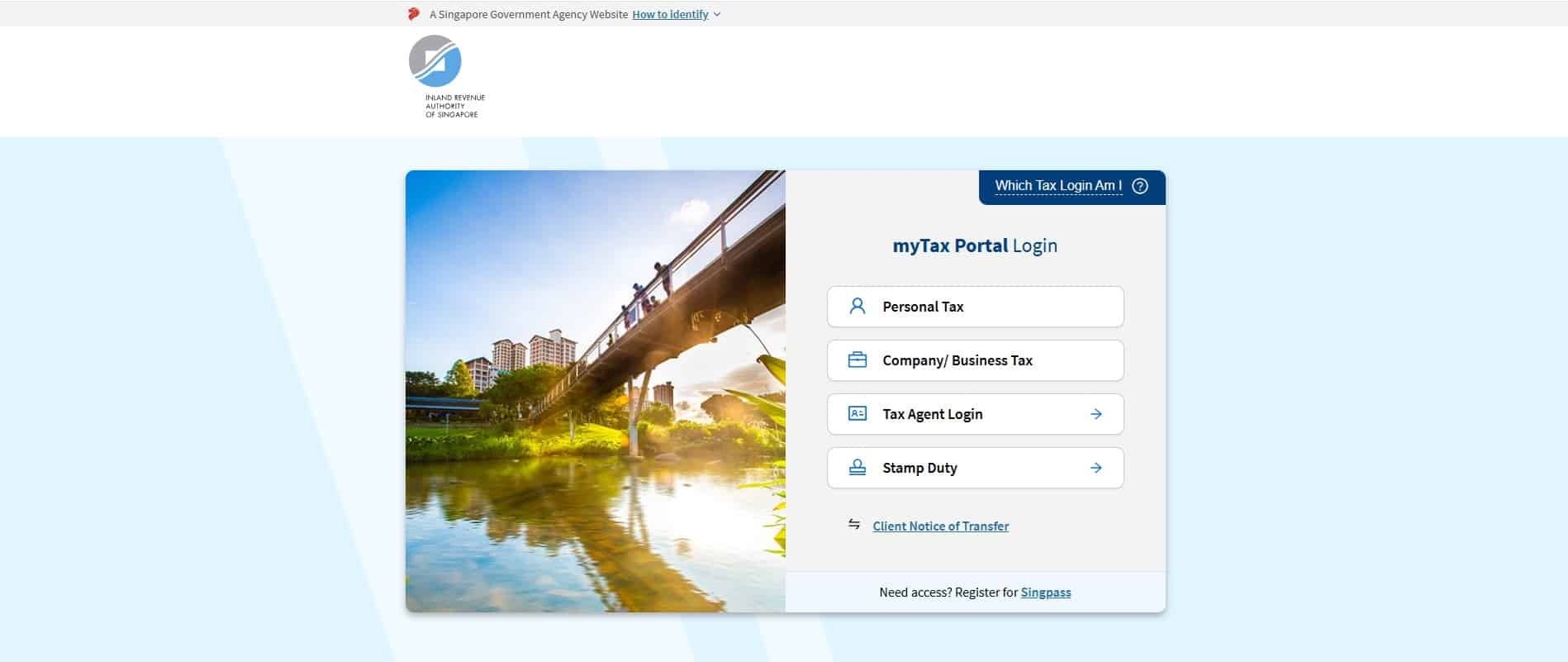
Everything happens through IRAS’s myTax Portal. If you’re a director or authorized person for your company, you’ll have CorpPass credentials to access it.
The interface is honestly not that bad, IRAS has improved it over the years. You log in, select the right form (ECI, Form C-S, etc.), fill in the required fields, and submit electronically. The system guides you through each section.
If you’re working with an accountant or tax firm, they can file on your behalf using their credentials. Most founders prefer this because the accountant handles all the calculations and ensures everything’s correct.
What “Automatic” Really Means
I want to emphasize this because there’s confusion: SUTE is automatic if you qualify and file properly. IRAS doesn’t proactively reach out and say “Hey, you might qualify for SUTE, would you like to claim it?” They assume you know the rules, meet the criteria, and indicate it correctly on your tax return.
If you’re eligible but forget to tick the SUTE box, you might end up paying more tax than necessary. If you tick the box but don’t actually qualify, IRAS might reject it during processing or audit you later.
The system works smoothly when you:
- Understand the eligibility rules
- Maintain proper documentation
- File accurately and on time
That’s it. No magic involved, just proper compliance.
Common SUTE Mistakes That Cost Startups Thousands (And How to Avoid Them)
I’ve watched enough startups stumble through their first three years to know exactly where people mess up with SUTE. Some of these mistakes cost thousands in lost savings. Others trigger IRAS audits that nobody wants to deal with.
Let me walk you through the big ones so you don’t repeat them.
Mistake 1: Misunderstanding the “3 Consecutive YAs” Rule
This is the most common misconception and it’s expensive.
Founders think they can “delay” their first Year of Assessment or “save” SUTE for when they’re actually profitable. Nope. The three-year clock starts ticking from your company’s first Year of Assessment after incorporation, whether you make money or not.
Here’s a real scenario, you incorporate your company in March 2023. Your first financial year ends December 31, 2023. That’s YA 2024. You’re pre-revenue, you make zero profit. Some founders think, “Great, I didn’t use my SUTE yet, I still have three years for when I’m profitable!” That’s Wrong.
YA 2024 counts as year 1 of your SUTE eligibility, even though you didn’t pay any tax (because there was no profit to tax). Your SUTE window is YA 2024, 2025, and 2026. By YA 2027, you’re on Partial Tax Exemption regardless of whether you ever used SUTE or not.
How to avoid this: Accept that the clock is running from day one. Focus on getting to profitability within those first three years so you can actually benefit from SUTE. If you’re not profitable by year 3, you’ve “wasted” the exemption, but that’s how it works. You can’t game the system to extend it.
Mistake 2: Thinking Unused Exemption Carries Forward
Another painful one. Let’s say in YA 2025 (your first YA), you only made S$30,000 chargeable income. You got 75% exemption on that S$30K, which is great. But you didn’t use the full S$100K tier-one exemption.
Some founders think the unused S$70K exemption carries forward to next year. It doesn’t.
Each Year of Assessment is independent. The exemption applies to whatever chargeable income you earn that year, up to the maximums (S$100K at 75%, next S$100K at 50%). If you don’t use the full amount in a given year, too bad. It’s gone.
Strategic implication: If you have control over timing (like when to recognize certain revenue or when to make deductible expenses), you might want to smooth your chargeable income across the three SUTE years rather than having one huge year and two tiny years. But realistically, for most startups, income is unpredictable enough that you can’t optimize this perfectly. Just be aware that it’s use-it-or-lose-it each year.
Mistake 3: Violating the 20-Shareholder Rule Mid-Year
This happens during fundraising and it’s brutal.
You start the year with 15 shareholders—you, your co-founders, and a few angel investors. Everything’s fine. Then in month 8, you close a funding round and bring on 10 more angels. Suddenly you have 25 shareholders.
Guess what? You’ve violated the “no more than 20 shareholders throughout the basis period” rule. Even though you were compliant for 8 months, that violation in the last 4 months disqualifies you for the entire year.
I’ve seen companies lose S$12,000+ in SUTE benefits because they didn’t think about shareholder count before structuring their funding round.
How to avoid this:
- Before raising capital, count your current shareholders
- If you’re approaching 20, structure your round differently, maybe use a single SPV (Special Purpose Vehicle) where multiple investors pool through one entity, which counts as one shareholder
- If you’re doing employee stock options, be very careful. Each employee who gets shares is a shareholder. Use an ESOP trust or structure to avoid hitting limits
- Work with a corporate lawyer who understands SUTE implications when structuring fundraising
Mistake 4: Not Maintaining Proper Tax Residency Documentation
Tax residency sounds automatic if you’re operating in Singapore, but IRAS can question it, especially if you’re a foreign founder or have directors based overseas.
IRAS determines tax residency based on where your company is “managed and controlled.” In practice, this means:
- Where do board meetings happen?
- Where are key business decisions made?
- Where are your bank accounts managed from?
- Where is your day-to-day operations headquarters?
If you incorporated in Singapore but you’re actually running everything from San Francisco, with all your directors based in the US, IRAS might say you’re not tax resident in Singapore. That disqualifies you from SUTE.
How to avoid this:
- Hold board meetings in Singapore (or at minimum, document that decisions are made per Singapore regulations)
- Keep minutes of board meetings showing management and control in Singapore
- Have at least some physical presence—office, employees, operations—in Singapore
- If directors are overseas, ensure there’s proper documentation showing the company is still managed from Singapore
Mistake 5: Tax-Splitting Schemes Using Multiple Shell Companies
Some “clever” founders think: “If SUTE gives me S$21K tax savings per company, what if I set up 3 companies and split my income across them? I could triple my tax savings!”
Don’t. Do. This.
IRAS specifically watches for artificial arrangements designed solely to multiply tax exemptions. If your three “separate” companies are clearly related, doing substantially similar business, controlled by the same people, and structured purely to split income for tax purposes, IRAS will hit you with anti-avoidance rules.
You might get away with it for a year or two, but when IRAS audits (and they will eventually), you’ll face:
- Disallowance of SUTE for all the companies
- Back taxes owed
- Penalties and interest
- Potential criminal charges if it’s deemed tax evasion
The line between legitimate and artificial:
- Legitimate: You run two genuinely separate businesses with different operations, different customers, different value propositions. Both happen to qualify for SUTE independently. That’s fine.
- Artificial: You create three shell companies that all do the same thing, funnel revenue between them to stay under S$200K each, and have no business reason for the structure except tax savings. That’s not fine.
If you have genuine reasons for multiple entities (different markets, regulatory requirements, investor structures), document those reasons clearly. Make sure each entity has real substance. And consult a tax advisor before implementing anything complex.
Mistake 6: Poor Record-Keeping That Triggers IRAS Audits
IRAS doesn’t audit every company, but when they do pick you, inadequate documentation makes everything 10x worse.
You need to maintain:
- Financial statements
- Full tax computation worksheets
- Supporting documents for every adjustment (add-backs, deductions, capital allowances)
- Shareholder registers with dates of changes
- Board meeting minutes
- Contracts, invoices, receipts for major transactions
These records need to be kept for at least 5 years. Some advisors recommend 7 years to be safe.
I’ve seen companies get audited 3-4 years after a tax filing. If you can’t produce supporting documentation because “we didn’t think we needed to keep that,” you’re in trouble. IRAS might disallow deductions, add back expenses, and recalculate your tax liability, often with penalties and interest.
How to avoid this:
- Set up a proper filing system from day one (cloud storage like Google Drive or Dropbox works fine)
- Create folders for each financial year with all relevant documents
- Work with an accountant who maintains records as part of their service
- Never throw away corporate documents until you’re 100% certain the retention period has passed
The time to organize your records is now, not when IRAS sends you a notice requesting documents from 2023.
What Happens After Year 3? SUTE vs Partial Tax Exemption (PTE) Explained
So you’ve survived your first three years. Congrats, statistically, you’re ahead of most startups. But SUTE is over. What happens to your tax situation in year 4 and beyond?
Enter the Partial Tax Exemption (PTE), which is basically SUTE’s less generous but still helpful cousin.
PTE Structure for YA 2026 (And Beyond)
PTE has been around longer than SUTE and applies to all Singapore tax-resident companies that don’t qualify for SUTE. Once your SUTE period ends after 3 years, you automatically transition to PTE.
Here’s the PTE structure that applies from YA 2020 onwards (and still applies for YA 2026):
- Tier 1: 75% exemption on the first S$10,000 of chargeable income
- Tier 2: 50% exemption on the next S$190,000 of chargeable income
Notice anything? The percentages are the same as SUTE (75% and 50%), but the amounts are way smaller. SUTE gives you 75% exemption on the first S$100K; PTE only gives it on the first S$10K.
PTE Tax Savings Calculation
Let’s run a quick example with S$200,000 chargeable income under PTE:
| Tier | Income Portion | Exemption Rate | Amount Exempted | Amount Taxable | Tax (17%) |
|---|---|---|---|---|---|
| Tier 1 | First S$10,000 | 75% | S$7,500 | S$2,500 | S$425 |
| Tier 2 | Next S$190,000 | 50% | S$95,000 | S$95,000 | S$16,150 |
| Total | — | — | S$102,500 | S$97,500 | S$16,575 |
Tier 1:
- First S$10,000 × 75% = S$7,500 exempted
- Taxable: S$2,500
- Tax on tier 1: S$2,500 × 17% = S$425
Tier 2:
- Next S$190,000 × 50% = S$95,000 exempted
- Taxable: S$95,000
- Tax on tier 2: S$95,000 × 17% = S$16,150
Total tax payable: S$425 + S$16,150 = S$16,575
Compare that to SUTE on the same S$200K:
| Scheme | Tax Payable |
|---|---|
| SUTE | ~S$8,500 |
| PTE | S$16,575 |
- SUTE tax payable would be roughly S$8,500
- PTE tax payable is S$16,575
You’re paying nearly double under PTE compared to SUTE. That’s why those first three years are so valuable.
Maximum PTE Savings
The maximum you can save under PTE is:
- 75% on S$10K = S$1,275 saved
- 50% on S$190K = S$16,150 saved
- Total max PTE benefit: S$17,425 per year
Under SUTE, max savings was S$21,250. So you lose about S$4,000 annually in tax relief once SUTE ends.
But PTE Lasts Forever
Here’s the silver lining: unlike SUTE which expires after 3 years, PTE applies indefinitely as long as your company remains tax-resident in Singapore and doesn’t fall into excluded categories.
So year 4, year 5, year 10, year 20, you’re still getting PTE. It’s a permanent fixture of Singapore’s corporate tax regime, designed to provide ongoing relief for SMEs.
Transition Planning: From SUTE to PTE
The transition from SUTE to PTE happens automatically. You don’t need to apply or change anything. Once your fourth Year of Assessment hits, you simply stop ticking the SUTE box on your tax return and tick the PTE box instead.
But the financial impact is real. If your company was consistently earning S$200K chargeable income and saving S$21K annually under SUTE, suddenly you’re saving only S$17K under PTE. That’s a S$4K increase in your tax bill.
Smart founders plan for this:
- Don’t budget assuming SUTE-level savings will last forever
- In year 3 of SUTE, start provisioning for the higher tax rate that’s coming
- Adjust your cash flow forecasts to account for the increased tax expense from year 4 onwards
- Consider whether it makes sense to accelerate certain expenses into year 3 (while you have better exemptions) or defer them to year 4
What Happens If You Grow Beyond S$200K Exemption Threshold?
Whether you’re on SUTE or PTE, once your chargeable income exceeds S$200K, the portion above that threshold is taxed at the full 17% corporate rate.
If you’re earning S$500K chargeable income:
Under PTE:
| Portion of Income | Exemption | Taxable Amount | Tax (17%) |
|---|---|---|---|
| First S$10,000 | 75% exempt | S$2,500 | S$425 |
| Next S$190,000 | 50% exempt | S$95,000 | S$16,150 |
| Remaining S$300,000 | No exemption | S$300,000 | S$51,000 |
| Total | — | — | ~S$53K–S$54K |
- First S$10K: 75% exempted → tax on S$2,500
- Next S$190K: 50% exempted → tax on S$95K
- Remaining S$300K: no exemption → tax on S$300K at 17%
- Total tax: roughly S$53K-S$54K
Your effective tax rate is around 10-11%, which is still better than the headline 17%, but you’re paying significant tax once you scale.
This is normal and expected. Singapore’s tax system is designed to provide relief for smaller companies (hence SUTE and PTE), but as you grow and become more profitable, you contribute more tax. That’s how it’s supposed to work.
Long-Term Tax Planning for Mature Startups
Once you’re past the SUTE phase and operating on PTE, your tax planning shifts:
- Focus on legitimate deductions and capital allowances to minimize chargeable income
- Consider R&D tax incentives if you’re doing qualifying research and development
- Look into other Singapore tax incentives for specific industries or activities (there are many)
- If you’re scaling internationally, think about group structuring and transfer pricing
- Continue maintaining excellent records because higher profits = higher chance of IRAS scrutiny
The key insight: SUTE is your startup lifeline. PTE is your ongoing SME support. As you grow beyond SME scale, you’ll rely more on sophisticated tax planning and less on automatic exemptions.
But Singapore’s overall corporate tax environment remains competitive globally, even at the full 17% rate, you’re paying less than most developed countries. Combined with PTE and other incentives, it’s still a favorable place to build and scale a business.
Read also: Complete Guide to Corporate Tax in Singapore (Update 2026)
SUTE Tax Planning Strategies for First-Time Founders
Let’s talk strategy. You understand the rules now, but how do you actually optimize your SUTE benefit while staying compliant?
Here are the practical tactics I’ve learned (sometimes the hard way) and seen other founders use successfully.
Timing Your Incorporation: Does It Matter?
First question: when you incorporate affects which Year of Assessment you start with.
If you incorporate in January 2024 and run a calendar financial year (Jan-Dec), your first financial year ends December 31, 2024. That’s YA 2025. Your SUTE window is YA 2025, 2026, and 2027.
If you incorporate in December 2024 and run a calendar year, your first financial year is literally one month (Dec 2024). That’s still YA 2025. You’ve “used up” YA 2025 despite only operating for one month.
Some founders incorporate in January or February to maximize the first financial year. Others don’t worry about it because operational readiness matters more than tax optimization.
Don’t delay incorporating just to game your first YA by a few months. The real value of SUTE comes from being profitable in those first three years, not from micro-optimizing when the clock starts. Get your company set up when you’re ready to start operating.
That said, if you’re choosing between incorporating on December 28 vs January 3, go with January. Why waste a Year of Assessment on a partial month?
Managing Shareholder Composition During Fundraising
This is critical and many founders screw it up.
You need to stay under 20 shareholders throughout your financial year. If you’re planning to raise capital, especially from angels or crowdfunding, you can easily blow past that limit.
Strategies to manage this:
- Use a Special Purpose Vehicle (SPV): Instead of having 15 individual angel investors each become direct shareholders, create an SPV (a holding company) where those 15 angels invest. The SPV becomes one shareholder in your operating company. As long as the SPV itself meets SUTE criteria (all individual shareholders, or one holding ≥10%), you’re good.
- Structured ESOP: Don’t grant shares directly to every employee. Use an ESOP trust or pool where the trust is the shareholder, not each individual employee. This keeps your shareholder count low while still offering equity compensation.
- Convertible instruments: If you’re raising via convertible notes or SAFE agreements, those don’t count as shareholders until they convert. You can bring on multiple investors via convertibles, and as long as they don’t convert (or convert after your SUTE period), you might stay under 20. But be careful—once they convert, if you exceed 20 shareholders, you lose SUTE for that year.
- Timing your fundraising: If you’re in month 11 of your financial year and close to 20 shareholders, maybe delay bringing on more investors until after your financial year-end. That way you preserve SUTE for the current year and deal with the shareholder limit issue in the next YA.
Capital Allowance Acceleration
Capital allowances reduce your chargeable income, which affects how much SUTE benefit you get.
Here’s the strategic question: should you accelerate capital allowances into your SUTE years, or defer them to later years when you’re on PTE?
Example scenario: You bought S$30,000 in equipment. You can claim 100% capital allowance (assuming it’s qualifying equipment like computers).
| Details | Option A: Claim in YA 2025 (SUTE Year 1) | Option B: Claim in YA 2028 (PTE Year 1) |
|---|---|---|
| Equipment Purchased | S$30,000 | S$30,000 |
| Capital Allowance | 100% claim | 100% claim |
| Reduction in Chargeable Income | S$30,000 | S$30,000 |
| Applicable Exemption Context | SUTE (75% tier) | PTE (50% tier on that band) |
| Estimated Tax Savings | ~S$3,825 | ~S$5,100 |
| Key Reason | Only 25% effectively taxed under SUTE | Larger portion taxed at full 17%, so allowance shields more tax |
| Better Outcome | — | ✅ Higher tax savings |
Option A: Claim the full S$30K allowance in YA 2025 (SUTE year 1)
- Reduces chargeable income by S$30K
- Saves you roughly S$3,825 in tax (assuming 75% exemption tier)
Option B: Defer the allowance to YA 2028 (PTE year 1, after SUTE ends)
- Reduces chargeable income by S$30K
- Saves you S$5,100 in tax (because you’re only getting 50% exemption on that income tier under PTE, so the full 17% rate applies to a larger portion)
Counterintuitive, right? You’d actually save more tax by claiming the allowance in a PTE year rather than a SUTE year, because SUTE already shields a lot of your income.
BUT there are practical considerations:
- Cash flow: Lower tax in early years might be more valuable for survival
- Certainty: You might not be around in year 4, so take the savings now
- Regulatory changes: Tax rules could change by year 4
Most accountants recommend taking capital allowances when you’re entitled to them rather than deferring. The cash flow benefit in early years usually outweighs the marginal tax difference. But it’s worth discussing with your tax advisor if you have significant capital expenditures.
Expense Timing: Accelerate or Defer?
Similar logic applies to deductible expenses. Should you accelerate expenses into the current year or defer them to next year?
If you’re in a SUTE year with high exemptions: Deferring expenses to next year might make sense if it pushes your chargeable income higher this year (you’re already getting good exemptions) and reduces it next year (when you might be in a lower exemption tier or on PTE).
If you’re approaching the end of SUTE: Accelerating deductible expenses into year 3 (while you still have SUTE) might make sense to reduce chargeable income while you have the better exemptions.
Honestly, this level of optimization is overkill for most startups. Your primary focus should be on running a sustainable business, not gaming tax timing. But if you have flexibility (like choosing whether to pay for a full year of software subscriptions in December vs January), it’s worth thinking about.
Cash Flow Forecasting With SUTE
The biggest practical benefit of understanding SUTE is better cash flow forecasting.
If you know you’ll make roughly S$150K chargeable income and you’ll owe about S$8,500 in tax (after SUTE), you can provision for that monthly. Set aside S$700/month so you’re not scrambling when the tax bill comes.
Too many founders don’t provision for tax and then get hit with a S$15K bill they didn’t budget for. Even if SUTE reduces it to S$8K, that’s still S$8K you need to pay. Plan for it.
Simple provisioning approach:
- Estimate your chargeable income quarterly
- Calculate expected tax liability (accounting for SUTE)
- Set aside that amount monthly
- When the bill comes, you’re ready
This is basic stuff, but you’d be surprised how many startups don’t do it.
Working With a Tax Advisor: Cost-Benefit
Should you hire a professional or DIY your corporate tax?
For most Singapore startups, especially if you’re claiming SUTE, working with a qualified tax advisor or accounting firm makes sense.
Costs:
- Small startup (revenue <S$500K): S$2,000-S$4,000 annually for tax compliance
- Medium startup (revenue S$500K-S$5M): S$4,000-S$8,000 annually
- Includes tax computation, Form C-S filing, advisory
Benefits:
- Accurate tax computation (avoiding overpayment or underpayment)
- Proper documentation if IRAS queries
- Advice on timing, capital allowances, and optimization
- Peace of mind that you’re compliant
If they save you even S$3,000 in tax through proper capital allowance claims and exemptions, they’ve paid for themselves. Plus, your time is valuable, spending 20 hours figuring out tax rules is probably not the best use of your time as a founder.
That said, you should still understand the basics (which is why you’re reading this guide). Don’t outsource your understanding, outsource the execution.
Build Tax Compliance Into Your Systems From Day One
Final strategic point: treat tax compliance as a core operational process, not an afterthought.
From day one:
- Use proper accounting software (Xero, QuickBooks, MYOB)
- Categorize expenses correctly
- Keep digital copies of all receipts and invoices
- Track shareholders and any changes
- Document board decisions
- Set up a corporate documents folder
When tax season comes, everything’s organized and ready. Your accountant can work efficiently, you don’t scramble looking for receipts from 11 months ago, and IRAS has no reason to question your filing.
Good founders treat compliance as boring but essential infrastructure. Bad founders ignore it until there’s a problem, then spend 10x the time and money fixing it.
SUTE for Foreign Entrepreneurs
If you’re a foreign founder incorporating in Singapore, SUTE is available to you, but there are some nuances you need to understand around tax residency and compliance.
Can Non-Residents Incorporate and Claim SUTE?
Yes. You don’t need to be a Singapore citizen or permanent resident to incorporate a Singapore company and claim SUTE.
What matters is:
- The company is incorporated in Singapore
- The company is tax resident in Singapore
- You meet all other SUTE criteria (shareholders, business activity, etc.)
Your personal residency status as a founder is separate from the company’s tax residency. You can be based in Jakarta, London, or San Francisco, as long as the company itself is tax resident in Singapore, SUTE is available.
Tax Residency Requirements for Foreign Founders
Here’s where it gets tricky. Tax residency for a company is determined by where it’s “managed and controlled.”
IRAS looks at:
- Where do board meetings happen?
- Where are strategic decisions made?
- Where is the company’s central management located?
- Where are day-to-day operations run from?
Red flag scenario: You incorporate in Singapore, but you’re based in Australia, all your directors are in Australia, board meetings happen via Zoom from Australia, and all business decisions are made in Australia. IRAS might argue your company is managed and controlled from Australia, not Singapore, making it not tax-resident in Singapore.
Compliant scenario: You incorporate in Singapore, have at least one director based in Singapore (or spend significant time there), hold board meetings in Singapore (even if some directors attend remotely), and have genuine operations or business activities in Singapore. IRAS would likely accept you’re tax resident.
Practical Steps to Establish Tax Residency
If you’re a foreign founder, here’s how to ensure your Singapore company is considered tax resident:
- Have a Singapore-based director: At least one director should be based in Singapore or spend substantial time there. This shows management is in Singapore.
- Hold board meetings in Singapore: Even if you’re remote, schedule board meetings in Singapore and document them properly. If directors attend via video call, note in the minutes that the meeting is being held in Singapore with remote participation.
- Maintain a real office or business address: Don’t just use a registered address service with no actual presence. Have an actual office, coworking space membership, or operational facility.
- Conduct business activities from Singapore: Even if your customers are global, having operations, employees, or service delivery happening from Singapore strengthens your tax residency position.
- Document everything: Keep board meeting minutes, emails showing decision-making, evidence of where management activities occur. If IRAS ever questions tax residency, you need proof.
Common Structures for Foreign Founders
Many foreign founders use these setups:
Setup 1: Direct incorporation with Employment Pass
- You move to Singapore on an Employment Pass (work visa)
- Incorporate and run the company from Singapore
- Clear tax residency, no issues
Setup 2: Remote founder with Singapore director
- You stay in your home country
- Appoint a Singapore-based director (maybe a local co-founder or professional director)
- Ensure real management happens in Singapore
- Higher scrutiny risk, but can work if done properly
Setup 3: Holding company structure
- You set up a parent company in your home country
- Singapore subsidiary operates as a separate entity
- Singapore company is tax resident in Singapore
- More complex, usually for larger operations
Read also: Financial Year End Compliance Singapore Checklist for SMEs (2026)
Employment Pass Holders as Shareholders
If you’re in Singapore on an Employment Pass (EP) and you’re also a shareholder in your company, that’s completely fine. Many foreign founders do this.
One consideration: if you’re on an EP sponsored by your own company, there are specific rules about salary levels and employment conditions. Make sure you comply with MOM (Ministry of Manpower) requirements, not just tax requirements.
Also, as an EP holder shareholder, you count toward the shareholder limit for SUTE (max 20). Since you’re an individual, this usually isn’t a problem, but be aware of it when structuring fundraising.
Cross-Border Tax Implications
This is important: just because your Singapore company pays tax in Singapore doesn’t mean you’re off the hook for tax in your home country.
Most countries tax their residents on worldwide income. If you’re a US citizen living in Singapore, for example, you still need to file US tax returns and potentially pay US tax on your Singapore company’s income (though there are credits and exemptions to avoid double taxation).
Key considerations:
- Understand your home country’s tax obligations as a foreign business owner
- Look into Double Tax Agreements (DTAs) between Singapore and your country
- Consider whether taking salary vs dividends from your Singapore company has different tax treatment
- Work with a cross-border tax advisor who understands both jurisdictions
I’ve seen founders optimize their Singapore tax perfectly, only to get hit with unexpected tax bills in their home country because they didn’t think about cross-border implications.
Resources for Foreign Entrepreneurs
Singapore actually makes it relatively easy for foreign entrepreneurs. Here are resources:
EntrePass: A work visa specifically for foreign entrepreneurs starting businesses in Singapore. If you qualify, this can be your pathway to living in Singapore while running your startup.
IRAS guidance: IRAS has specific guides for tax residency and international businesses. Their website is surprisingly helpful.
Enterprise Singapore: Government agency supporting startups with various programs and resources, including for foreign founders.
Accounting and corporate service firms: Many firms in Singapore specialize in helping foreign founders with incorporation, compliance, and tax. Worth the investment for peace of mind.
The key takeaway: SUTE is absolutely available to foreign founders, but you need to be more careful about demonstrating tax residency and maintaining proper compliance. Don’t assume that just because you incorporated in Singapore, everything is automatic.
IRAS Compliance and Documentation: What to Keep on File
Let’s talk about the boring but absolutely essential part: documentation and compliance.
I know this isn’t sexy. Nobody starts a company because they’re excited about filing systems. But inadequate documentation is how companies get into trouble with IRAS, lose SUTE benefits, or face penalties years later.
Here’s exactly what you need to maintain.
Financial Statements
You need proper financial statements for each financial year:
If you’re required to audit (revenue >S$10M, or meet other Companies Act criteria):
- Audited financial statements prepared by an approved auditor
- Includes balance sheet, P&L, cash flow statement, notes
If you’re not required to audit:
- Management accounts are fine
- Should still include balance sheet, P&L, and basic notes
- Prepared according to accounting standards
These statements form the basis of your tax computation. If your statements are inaccurate or incomplete, your tax filing will be too.
I recommend using proper accounting software from day one (Xero, QuickBooks, etc.) so your financials are automatically generated and accurate. Trying to reconstruct financials from bank statements and Excel spreadsheets at year-end is painful and error-prone.
Full Tax Computation Worksheets
This is the detailed calculation showing how you got from accounting profit to chargeable income.
It includes:
- Starting point: Net profit per financial statements
- Add-backs: Non-deductible expenses (entertainment, penalties, etc.)
- Deductions: Capital allowances, other legitimate deductions
- Ending point: Chargeable income
Your tax advisor prepares this, but you should keep a copy. If IRAS queries your tax return, this worksheet explains everything.
Supporting Schedules for All Adjustments
Every add-back and deduction needs support:
Capital allowances schedule:
- List of all assets claimed
- Purchase dates, costs, allowance rates
- Calculation of allowances claimed
Entertainment and non-deductible expense schedule:
- List of what was added back and why
- Supporting receipts/invoices
Other adjustments:
- Explanations and supporting documents for anything unusual
The principle: if you claimed it, you need to be able to prove it.
Shareholder Register
Critical for SUTE eligibility. You need a complete shareholder register showing:
- Names of all shareholders
- Number and class of shares held
- Percentage ownership
- Dates of any changes (share issuances, transfers, etc.)
This register must be updated every time there’s a change. If you issued shares to a new investor in March, it should be documented in March, not reconstructed in November when you’re filing tax.
IRAS specifically checks shareholder composition for SUTE. If you claim you had 18 shareholders all year, but you can’t produce a register that proves it, your claim gets rejected.
Board Meeting Minutes
These serve multiple purposes:
- For tax residency: Minutes showing board meetings were held in Singapore demonstrate management and control in Singapore.
- For business decisions: Minutes documenting major decisions (like purchasing equipment, entering contracts, declaring dividends) provide a paper trail.
- For compliance: Certain corporate actions require board approval. Minutes prove you followed proper governance.
You don’t need to write a novel—one-page summaries are fine. But document:
- Date, time, location of meeting
- Attendees
- Key decisions made
- Any resolutions passed
Proof of Tax Residency
Beyond board minutes, other evidence of tax residency includes:
- Lease agreement for Singapore office
- Employment contracts for Singapore-based employees
- Utility bills, business licenses
- Evidence of business operations in Singapore (customer contracts, delivery receipts, etc.)
If you’re a foreign founder or have international operations, maintaining clear evidence of Singapore tax residency is crucial.
ECI and Form C-S Submission Confirmations
After you file ECI and your corporate tax return, save the confirmation emails or acknowledgment receipts from IRAS.
These prove you filed on time. If there’s ever a dispute about late filing penalties, you have proof of when you submitted.
Correspondence with IRAS
Any emails, letters, or notices from IRAS should be kept in a dedicated folder. This includes:
- Notices of Assessment
- Queries or requests for information
- Responses you sent
- Any amendments to tax filings
If IRAS queries something in 2027 about your 2024 filing, you need to be able to pull up all related correspondence quickly.
How Long to Retain Documents
IRAS officially requires you to keep records for 5 years from the relevant Year of Assessment.
For YA 2026, you need to keep documents until at least end of 2031.
Many advisors recommend 7 years to be safe, especially for important documents like financial statements and tax computations.
Practical approach:
- Keep everything digitally (cloud storage is cheap and reliable)
- Organize by financial year
- Don’t delete anything until you’re absolutely certain the retention period has passed
- For critical documents (incorporation papers, shareholder agreements, IP assignments), keep them forever
Digital vs Physical Filing
I’m a strong advocate for digital-first documentation:
Advantages:
- Easier to search and retrieve
- No risk of physical damage or loss
- Can be backed up across multiple locations
- Accessible from anywhere
System I recommend:
- Cloud storage (Google Drive, Dropbox, etc.)
- Folder structure: [Company Name] > [Financial Year] > [Subcategories: Financial Statements, Tax Filings, Receipts, Contracts, etc.]
- Consistent naming conventions for files
- Regular backups
You can keep physical copies too if you want, but digital should be your primary system.
What Triggers an IRAS Audit
Nobody wants an audit, but knowing what triggers them helps you stay compliant:
Common triggers:
- Unusual fluctuations in income or expenses year-over-year
- High proportion of non-deductible expenses
- Industry-specific red flags (cash-heavy businesses, related-party transactions)
- Random selection (IRAS does periodic random audits)
- Whistleblower reports or specific complaints
- Inconsistencies between ECI and final return
- Claiming SUTE with questionable eligibility
How to prepare:
- Maintain excellent documentation (as outlined above)
- Ensure your tax computation is accurate and defensible
- Work with a qualified tax advisor who can handle IRAS communications
- Don’t panic, audits are a normal part of business, and if you’re compliant, you’ll be fine
If you do get audited, IRAS will typically request specific documents. You provide them, they review, they might ask follow-up questions, and eventually they close the audit. If they find issues, they’ll adjust your tax liability accordingly.
The companies that struggle in audits are the ones with poor documentation and sloppy record-keeping. If you’ve been diligent, an audit is just a minor inconvenience.
Final Thought on Compliance
I get it, this stuff is boring. You didn’t start a company to organize tax documents.
But here’s the reality, compliance is the price of admission for running a legitimate business. Singapore’s corporate tax system is actually pretty reasonable and entrepreneur-friendly. The trade-off is you need to play by the rules and keep proper records.
Think of it as insurance. You spend a few hours setting up good systems now, and you avoid spending weeks (and thousands in penalties) fixing problems later.
Why This Matters Right Now
If you’re reading this in 2026 and your financial year ended in 2025, your ECI is due by March 31, 2026 (assuming December year-end). That’s not far away.
If you haven’t filed yet, or you’re not sure if you filed correctly, or you DIY’d it last year and have a nagging feeling you might have missed something, talk to us now.
If you’re currently profitable and you’ve never claimed SUTE despite being eligible, you might be able to amend previous years’ returns and recover tax you shouldn’t have paid. The sooner you address it, the better.
If you’re planning to incorporate in 2026, getting your structure right from day one means you don’t waste any of your three SUTE years fixing mistakes.
Frequently Asked Questions About SUTE (YA 2026 Edition)
Let me tackle the questions I get asked constantly by founders, based on real situations I’ve seen.
1. Can I claim SUTE if I had losses in Year 1 and profits in Year 2?
Yes. SUTE eligibility isn’t dependent on being profitable every year—it’s based on your first three consecutive Years of Assessment.
If you made losses in YA 2024 (your first YA), you simply wouldn’t owe any tax that year. You’d still be “using” your first year of SUTE eligibility, but there’s no benefit because there’s no tax to exempt.
Then in YA 2025, if you’re profitable, SUTE applies to whatever chargeable income you earn that year.
The losses from year 1 can typically be carried forward to offset future profits, which is a separate tax provision. So you might use those YA 2024 losses to reduce your YA 2025 chargeable income, and then SUTE applies to whatever’s left.
2. What if my company has exactly 20 shareholders, do I qualify?
Yes, if you have exactly 20 shareholders (not more), you meet that criterion.
The rule is “no more than 20 shareholders,” which means ≤20. So 20 is fine, 21 is not.
But be very careful if you’re at exactly 20. Any share issuance to a new investor or employee will immediately disqualify you for that entire year.
3. Does SUTE apply to branches of foreign companies?
No. SUTE is only available to companies incorporated in Singapore under the Companies Act.
A Singapore branch of a foreign company is not a separate legal entity—it’s just an extension of the foreign parent. Therefore, it doesn’t qualify for SUTE.
If you’re a foreign company wanting to operate in Singapore and claim SUTE, you’d need to set up a Singapore subsidiary (a separate incorporated entity), not just register a branch.
4. Can a company claim SUTE if it acquired another business mid-year?
This gets complex and depends on the specifics, but generally:
If Company A (eligible for SUTE) acquires the business or assets of Company B, Company A can continue claiming SUTE as long as it still meets all the criteria.
The concern is if the acquisition changes something material:
- Did it push you over 20 shareholders?
- Did it change your principal business activity to something excluded (like investment holding)?
- Did it affect your tax residency?
If none of those changed, you should still qualify. But I’d recommend getting a formal opinion from your tax advisor before assuming anything.
5. What happens if I breach the 20-shareholder rule in month 11 of my financial year?
You lose SUTE for the entire year.
The rule is “no more than 20 shareholders throughout the basis period.” Even if you were compliant for 11 months and only violated it for one month, you fail the test for that entire Year of Assessment.
This is harsh but clear in the rules. It’s why shareholder management during fundraising is so critical.
6. Is SUTE available for companies doing e-commerce, SaaS, or consulting?
Yes, absolutely.
The exclusions are very specific: investment holding companies and property development companies (for sale or investment).
E-commerce, SaaS, consulting, marketing agencies, fintech, hardware, logistics, food & beverage, professional services—all of these qualify as long as you meet the other criteria.
SUTE is industry-agnostic for the vast majority of operating businesses.
7. Can I voluntarily not claim SUTE in Year 1 to save it for later?
No. You can’t “skip” a year or defer your SUTE eligibility.
If you qualify in a given year, you can claim it or not claim it (by not ticking the box on your tax return), but either way, that year counts toward your three consecutive YAs.
Even if you don’t claim SUTE in YA 2024, YA 2024 still counts as your first year. Your window is still YA 2024, 2025, 2026. You can’t push it to YA 2025, 2026, 2027 by skipping the first year.
There’s no strategic reason to not claim SUTE if you qualify. If you’re profitable and eligible, claim it. Period.
8. How does SUTE interact with other Singapore tax incentives?
SUTE can generally be combined with other tax deductions and reliefs, but not with other tax exemptions that cover the same income.
For example:
- R&D tax deductions: If you’re doing qualifying R&D and claiming enhanced deductions (like 250% deduction on qualifying R&D expenses), that reduces your chargeable income. SUTE then applies to the reduced chargeable income. They work together.
- Other sector-specific exemptions: If you qualify for a specific tax incentive scheme that exempts certain income, you typically can’t “double-dip” by also applying SUTE to that same income. You’d use whichever scheme is more beneficial.
Most startups don’t have complex overlapping incentives. If you do, work with a tax advisor to structure your claims optimally.
9. What if IRAS rejects my SUTE claim, can I appeal?
Yes. If IRAS rejects your SUTE claim (typically indicated in your Notice of Assessment), you have the right to object.
The process:
- File a notice of objection within 30 days of receiving the NOA
- Explain why you believe you qualify and provide supporting evidence
- IRAS reviews and either accepts your objection, rejects it, or asks for more information
- If rejected again, you can escalate to formal appeal processes
Most rejections happen because of unclear documentation or borderline eligibility situations (like shareholder count or tax residency questions). If you legitimately qualify and have proper documentation, objections usually resolve in your favor.
But if you clearly violated a rule (like having 25 shareholders), an objection won’t help.
10. Do I need to claim the same exemption amount every year?
No, SUTE applies based on your actual chargeable income each year.
If you make S$50K in year 1, S$150K in year 2, and S$200K in year 3, the exemption applies proportionally each year. There’s no requirement to be consistent.
11. What if my company changes its financial year-end during the SUTE period?
Changing your financial year-end is possible but complicated from a tax perspective.
Your Year of Assessment is based on your financial year. If you change your year-end, you might create a short financial period (e.g., if you change from Dec 31 to Jun 30, you’d have a Jan-Jun short period).
That short period would still count as one of your YAs, even though it’s only 6 months. So you could “burn” a year of SUTE on a partial year, which is inefficient.
My advice: don’t change your financial year-end during your SUTE period unless there’s a compelling business reason. If you do need to, get tax advice first.
Conclusion
SUTE is one of the most valuable benefits available to Singapore startups, potentially saving you S$10,000 to S$21,000 annually in corporate tax during your first three critical years. That’s money that stays in your bank account, funding your next hire, your marketing experiments, or just extending your runway by a few crucial months.
The eligibility rules are clear but strict: you need to be incorporated in Singapore, tax resident here, have 20 or fewer shareholders (with specific composition requirements), and your business can’t be investment holding or property development. If you meet those criteria, SUTE applies to up to S$200,000 of your chargeable income, 75% exemption on the first S$100K, 50% on the next S$100K.
For YA 2026, nothing has changed structurally. The same SUTE rules apply. If your financial year ended in 2025, you’re filing under YA 2026, and these are your numbers.
Remember the pitfalls that trip people up: the three-year window starts from incorporation whether you’re profitable or not, unused exemption doesn’t carry forward to next year, and violating the shareholder limit even in month 11 disqualifies you for the whole year. These aren’t theoretical risks, I’ve seen real companies lose real money because they didn’t understand the rules.
Filing is straightforward if you’re organized. Submit your ECI within 3 months of year-end, file Form C-S (or the appropriate tax return) by November 30, indicate your SUTE eligibility, and keep proper documentation in case IRAS asks. Work with a qualified tax advisor if you’re not confident doing this yourself, it’s worth the cost.
And look, even when SUTE ends after year 3, Singapore still supports you through Partial Tax Exemption. You’ll pay more tax in year 4 than year 3, but you’re still getting relief. This isn’t a country that punishes success, it’s designed to help businesses grow while contributing fairly once they’re established.
So here’s my final advice:
If you qualify for SUTE and you’re not claiming it, you’re leaving money on the table. Fix that immediately.
If you’re about to incorporate and you’re thinking about Singapore, understand that SUTE is just one piece of a broader ecosystem designed to support startups. Combined with reasonable regulation, access to capital, and a stable business environment, it’s genuinely a good place to build.
If you’re unsure about your eligibility, or you have a complex situation (foreign founder, multiple shareholders, planning a fundraising round), talk to a professional. A S$300 consultation could save you S$10,000 in tax. That’s a no-brainer ROI.
And finally, treat compliance seriously from day one. Good documentation, organized records, and proper governance aren’t burdens, they’re the foundation of a sustainable business that can scale without constantly putting out administrative fires.
SUTE exists because Singapore wants you to succeed. Use it wisely, use it correctly, and build something that lasts beyond those first three years.
References
- Singapore Corporate Compliance Changes 2026
- Complete Guide to Corporate Tax in Singapore (Update 2026)
- [2026 Guide] How to Start a Business in Singapore as a Foreigner
- Corporate Secretary Services for Local & Foreign Firms
- Corporate Tax Filing & Advisory
Bizsquare Accounting is a Singapore-based accounting firm specializing in startup tax compliance, SUTE optimization, and practical financial advisory for growing companies. We work with local and foreign founders across tech, e-commerce, professional services, and other industries to navigate Singapore’s corporate tax system efficiently and compliantly.


1 Comment
Why Company Incorporation in Singapore Is Ideal for Foreign Business
March 05, 2026, at 4:10 am[…] incorporated Singapore companies can benefit from a partial tax exemption scheme for their first three consecutive years of assessment. Under this scheme, qualifying companies pay […]