Company Incorporation in Indonesia
Set up your Indonesia company the right way with clear guidance on structure, documentation, and licensing so you can start operations with confidence.
Get a Free ConsultationCompany Incorporation in Indonesia
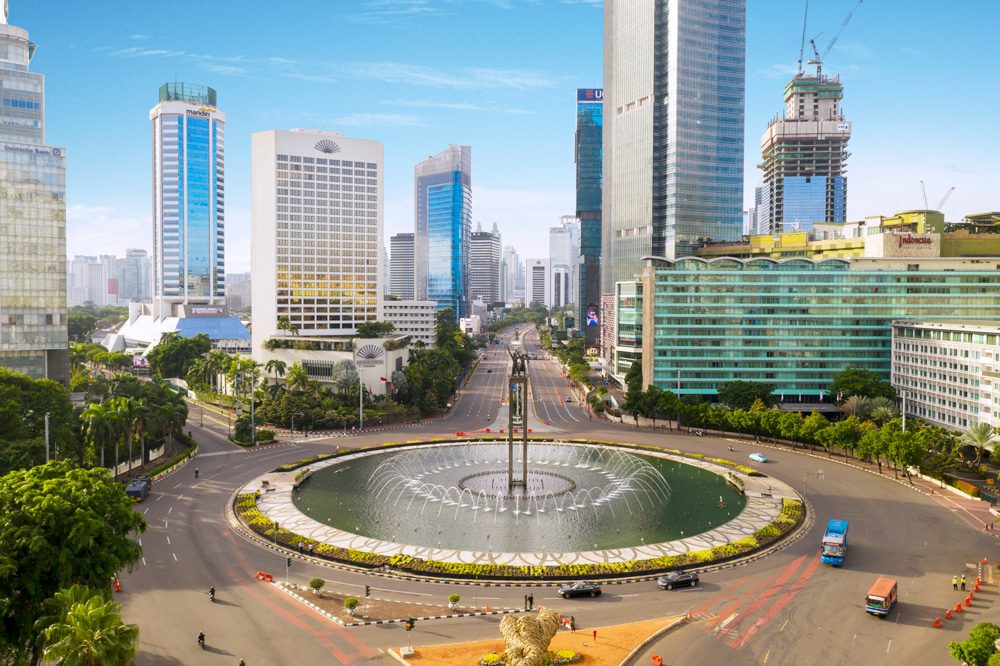
Indonesia is no longer just a regional market. It is a global investment frontier.
With a population exceeding 277 million people, Indonesia ranks as the fourth most populous nation on earth. Its economy is the largest in Southeast Asia. It is also the 16th largest economy in the world by GDP.
Foreign investors from across Asia, Europe, and the Americas are taking notice. Company incorporation in Indonesia has accelerated significantly over the past five years. Regulatory reforms, digital infrastructure growth, and a rising middle class have made the country far more accessible to international business.
For Singaporean entrepreneurs and foreign investors already based in the region, Indonesia represents a natural next step. It sits just across the Strait of Malacca from Singapore. Bilateral trade and investment flows between the two countries remain among the strongest in ASEAN.
This article covers what foreign investors need to know about Indonesia business registration. It explains the available legal structures, key regulatory requirements, and the strategic advantages of establishing a company in Indonesia today.
1. Indonesia’s Economic Landscape: The Case for Foreign Investment
The numbers behind Indonesia’s economy are compelling. GDP growth has remained consistently above 5% annually for much of the past decade. Consumer spending is rising. Digital adoption is accelerating at a pace few markets can match.
Indonesia is home to the largest digital economy in Southeast Asia. The country’s internet economy was valued at over USD 77 billion in 2022. It is projected to surpass USD 130 billion by 2025. E-commerce, fintech, logistics, and education technology are among the fastest-growing sectors.
The government has positioned Indonesia as an investment-friendly destination. President Joko Widodo’s administration introduced sweeping reforms through the Omnibus Law on Job Creation in 2020. This law streamlined business licensing, simplified labour regulations, and opened more sectors to foreign ownership.
The results are visible. Foreign direct investment (FDI) inflows into Indonesia reached IDR 901.0 trillion in 2023, a record high. Investors from Singapore, Japan, China, Hong Kong, and the United States led the inflows.
Key economic indicators that attract foreign investors:
2. Legal Structures for Foreign Company Registration in Indonesia
Foreign investors looking to register a company in Indonesia must understand the available legal structures. The choice of structure affects ownership rights, tax obligations, and operational flexibility.
2.1 PT PMA (Penanaman Modal Asing)
The PT PMA is the primary legal vehicle for foreign company incorporation in Indonesia. PT PMA stands for Perseroan Terbatas Penanaman Modal Asing, which translates to Foreign Capital Investment Limited Liability Company.
A PT PMA allows foreign investors to hold equity stakes in an Indonesian company. The permitted foreign ownership percentage depends on the business sector. Some sectors allow 100% foreign ownership. Others require local Indonesian partners to hold a minimum equity stake.
The PT PMA is a separate legal entity from its shareholders. It can own assets, enter contracts, and hire employees independently. This structure provides limited liability protection to foreign investors. It is the most widely used structure for foreign company Indonesia registrations.
2.2 PT (Perseroan Terbatas), or Local Limited Liability Company
A PT is a locally incorporated limited liability company. Foreign investors cannot directly own shares in a PT. However, they may participate indirectly through nominee arrangements or by partnering with Indonesian shareholders.
A PT is suited for businesses that operate in sectors restricted to foreign investment. It is also used when a foreign investor has an Indonesian partner who holds the majority of shares.
2.3 Representative Office (KPPA)
A Kantor Perwakilan Perusahaan Asing (KPPA), or Foreign Company Representative Office, is a non-trading presence in Indonesia. It cannot generate revenue directly or enter into commercial contracts.
A representative office is used for market research, liaison activities, and business development. It is a common first step for foreign companies exploring the Indonesian market. It can be converted into a PT PMA once the company is ready to begin full operations.
2.4 Branch Office
Foreign companies in certain permitted sectors may establish a branch office in Indonesia. A branch is not a separate legal entity. The parent company remains fully liable for the branch’s obligations. Branch offices face more restrictions compared to a PT PMA in terms of permitted activities.
Quick Comparison: Legal Structures for Foreign Investors
Legal Structure | Key Feature for Foreign Investors |
PT PMA | Foreign equity permitted; separate legal entity; most flexible |
PT (Local Company) | No direct foreign ownership; requires Indonesian shareholders |
Representative Office (KPPA) | Non-revenue generating; market research and liaison only |
Branch Office | Extension of parent; limited to permitted sectors; full parent liability |
3. The Positive Investment List: Understanding Foreign Ownership Limits
Indonesia’s investment framework is governed by the Positive Investment List (PIL). This list replaced the previous Negative Investment List under the Omnibus Law reforms.
The Positive Investment List sets out which business sectors are open to foreign investment. It also specifies the maximum foreign ownership percentage permitted in each sector. The shift from a negative to a positive list framework signals a more open and investment-friendly approach from the Indonesian government.
Sectors fully open to 100% foreign ownership include e-commerce, logistics, manufacturing, tourism, and many technology-related businesses. Sectors with partial foreign ownership limits include media, telecommunications, and certain financial services. Sectors reserved for domestic investors include small-scale retail trade and specific cultural industries.
For Singaporean companies and other foreign investors, the Positive Investment List is the first document to review before proceeding with Indonesia business registration. Identifying the correct business classification determines the ownership structure and partner requirements from the outset.
4. Step-by-Step Process to Start a Business in Indonesia
The Indonesia business registration process has been significantly simplified in recent years. The Online Single Submission (OSS) system introduced in 2018 and enhanced in 2021 provides a centralised platform for all business licensing and registration activities.
Key steps to register a company in Indonesia as a foreign investor:
The Indonesia business registration process has been significantly simplified in recent years. The Online Single Submission (OSS) system introduced in 2018 and enhanced in 2021 provides a centralised platform for all business licensing and registration activities.
5. Minimum Capital Requirements for PT PMA
One of the most common questions from foreign investors concerns the minimum capital required to incorporate a PT PMA in Indonesia.
Under the latest regulation, Perka BKPM 5/2025, the capital framework for PT PMA has been updated. Two distinct capital thresholds now apply to all PT PMA incorporations.
First, the minimum paid-up capital (modal disetor) is IDR 2.5 billion. This amount must be fully placed and paid up at the time of incorporation. Second, the total planned investment value (rencana nilai investasi) must exceed IDR 10 billion, excluding the value of land and buildings. This total investment commitment applies per business activity code (5-digit KBLI) per project location.
It is important to understand the distinction between these two figures. The paid-up capital of IDR 2.5 billion represents the actual cash injection into the company at incorporation. The total planned investment of more than IDR 10 billion is a committed figure entered into the OSS system, reflecting the investor’s full investment plan over the project lifecycle.
A summary of the PT PMA capital requirements under Perka BKPM 5/2025 is set out below.
Capital Requirement | Detail (Perka BKPM 5/2025) |
Minimum Paid-Up Capital (Modal Disetor) | IDR 2.5 billion, must be fully placed and paid up at incorporation |
Total Planned Investment Value (Rencana Nilai Investasi) | Must exceed IDR 10 billion per KBLI code per project location, excluding land and buildings |
Exemptions | Certain exemptions may apply for Special Economic Zones (KEK) and specific business sectors |
Estimated Incorporation Costs (Professional Fees) | Notary and agent fees typically range from IDR 10 million to IDR 30 million, separate from paid-up capital |
For Singaporean companies and other foreign investors, both the paid-up capital and total investment plan must be structured correctly from the outset. The total investment figure is formally committed in the OSS system during registration. Errors in this commitment can create regulatory complications at a later stage.
Working with an experienced incorporation advisor ensures both thresholds are correctly reflected in the company’s founding documents and OSS investment plan from day one.
6. Tax Framework for Foreign-Owned Companies in Indonesia
Understanding Indonesia’s tax framework is essential for any foreign investor planning to start a business in Indonesia. The tax environment has been modernised considerably over the past decade. Several reforms have been introduced to improve compliance, reduce administrative burden, and attract foreign capital.
6.1 Corporate Income Tax
The standard corporate income tax rate in Indonesia is 22%. This applies to the taxable income of PT PMA entities and other corporate structures. Small and medium-sized companies that meet specific revenue thresholds may qualify for a reduced rate.
6.2 Value Added Tax (VAT)
VAT in Indonesia is currently set at 11%, applicable to most goods and services. Companies that exceed the VAT threshold must register as Taxable Entrepreneurs (Pengusaha Kena Pajak) and collect VAT on taxable transactions. Input VAT on business expenses can be credited against output VAT obligations.
6.3 Withholding Tax
Indonesia imposes withholding taxes on various cross-border payments, including dividends, royalties, interest, and service fees paid to non-residents. The applicable withholding tax rate is generally 20%, unless reduced under an applicable tax treaty.
Indonesia has signed tax treaties with over 68 countries, including Singapore. Under the Singapore-Indonesia tax treaty, withholding tax on dividends can be reduced to as low as 10%. This is a significant advantage for Singaporean holding companies investing into Indonesia through a PT PMA structure.
6.4 Transfer Pricing Regulations
Indonesian tax authorities apply OECD-aligned transfer pricing rules to related-party transactions. Foreign companies with Indonesian subsidiaries must maintain contemporaneous transfer pricing documentation. This is particularly relevant for Singaporean regional holding structures with Indonesian operating entities.
7. Key Sectors Attracting Foreign Investment in Indonesia
Indonesia’s economic transformation presents opportunities across a wide range of industries. Foreign companies looking to register a company in Indonesia are increasingly targeting the following high-growth sectors.
High-growth sectors open to foreign investment:
8. The Singapore-Indonesia Investment Corridor
Singapore is Indonesia’s largest source of foreign direct investment. The bilateral relationship is supported by strong trade ties, shared ASEAN membership, and a long-standing tax treaty.
Singapore-based companies enjoy distinct advantages when expanding into Indonesia. The Singapore-Indonesia Avoidance of Double Taxation Agreement (DTA) reduces or eliminates double taxation on cross-border income. The ASEAN Investment Framework provides additional protections and facilitation measures for ASEAN-incorporated investors.
Many Singaporean companies structure their Indonesian investments through a Singapore holding company. The holding company owns shares in the PT PMA in Indonesia. This structure allows the group to benefit from treaty-reduced withholding taxes on dividends repatriated from Indonesia to Singapore.
For Singaporean entrepreneurs and foreign investors already incorporated in Singapore, incorporating a subsidiary or associated company in Indonesia is a logical and well-supported expansion move. The cultural familiarity, geographic proximity, and strong business networks between the two countries make cross-border operations highly manageable.
9. Common Challenges and How to Navigate Them
Company incorporation in Indonesia offers enormous opportunity. It also comes with challenges that foreign investors should understand before proceeding.
9.1 Language and Documentation
All official company documents in Indonesia must be prepared in the Indonesian language (Bahasa Indonesia). Foreign-language documents submitted to government agencies must be accompanied by certified translations. Working with a professional corporate services provider ensures that all documentation meets this requirement accurately.
9.2 Navigating the Positive Investment List
Correctly identifying the applicable KBLI (Klasifikasi Baku Lapangan Usaha Indonesia) business classification code is critical. An incorrect code can result in delays, licensing complications, or regulatory non-compliance. A knowledgeable advisor helps foreign investors select the correct classification from the outset.
9.3 Local Director and Commissioner Requirements
A PT PMA must have at least two shareholders, two directors, and one independent commissioner. A majority of directors must be Indonesian nationals, or a foreign director must hold a valid work permit (KITAS) and a limited stay permit. This requirement is one of the most common operational hurdles for foreign investors.
9.4 Ongoing Compliance Obligations
A PT PMA has ongoing statutory obligations. These include annual financial statement preparation, corporate tax filings, monthly VAT returns, payroll tax reporting, and BKPM (Investment Coordinating Board) activity reporting. Foreign investors who are not based in Indonesia require a reliable local compliance partner to manage these obligations consistently.
10. Why Professional Incorporation Services Matter for Foreign Investors
Foreign investors who attempt to navigate Indonesia’s company registration process without professional support face significant risks. The regulatory framework is detailed, multilingual, and subject to periodic change. Errors in documentation, incorrect business classifications, or missed compliance deadlines can result in costly delays or legal complications.
A professional incorporation services provider brings knowledge of the local regulatory environment, established relationships with government agencies, and practical experience in managing the full incorporation process efficiently. For Singaporean companies expanding into Indonesia, a provider with cross-border expertise in both Singapore and Indonesian regulatory frameworks is particularly valuable.
The right provider does not simply handle the incorporation paperwork. They advise on the optimal corporate structure, prepare all required documentation, coordinate with Indonesian notaries and government agencies, and support the company’s ongoing compliance obligations after incorporation.
For foreign investors managing their Indonesian operations from Singapore or abroad, having a trusted local compliance partner in Indonesia is not optional. It is an essential part of building a sustainable, compliant, and professionally managed business in the country.
Indonesia’s position as Southeast Asia’s largest economy, combined with its reform-driven regulatory environment and rapidly expanding consumer market, makes it one of the most compelling destinations for foreign business investment today.
Company incorporation in Indonesia provides foreign investors with direct access to one of the world’s fastest-growing markets. The PT PMA structure offers legal clarity, limited liability protection, and operational flexibility for foreign-owned companies across a wide range of sectors.
For Singaporean companies and other foreign investors, the combination of geographic proximity, strong bilateral trade ties, and treaty-backed tax advantages makes Indonesia a natural extension of any regional growth strategy.
Approaching Indonesia business registration with the right professional support transforms a complex regulatory process into a manageable and strategically sound investment decision.
Incorporate Your Company in Indonesia the Smart
and Simple Way
We Make It Simple & Fast
Expanding into Indonesia can be a huge growth move but company formation can feel complex if you’re unfamiliar with local requirements. Bizsquare Accounting provides Company Incorporation in Indonesia support for business owners and SMEs who want a smoother, more compliant setup.
Whether you’re setting up a PT PMA (foreign-owned) or a PT (local) company, we help coordinate the incorporation steps and guide you through OSS registration, NIB, relevant licensing, and basic compliance requirements.
Why Establish Your Business in Indonesia?
Indonesia is one of Southeast Asia’s fastest-growing markets, offering strong demand across multiple industries and improving regulations for foreign investors. For many international companies, Indonesia becomes a strategic base for long-term regional expansion.
Key benefits of having a local company:
- Stronger credibility with partners and clients
- Better negotiation on payment terms (not just upfront or informal payments)
- Easier access to local suppliers, partners, and customers
- Ability to operate properly and hold business assets in Indonesia
Why Bizsquare Accounting
Cross-border friendly (Singapore → Indonesia)
We work well with Singapore founders who want a trusted partner to coordinate incorporation steps.
Structure done right
We help you choose the suitable entity type and shareholding approach based on your business goals.
Fewer delays
Proper documentation + correct business activity classification reduces unnecessary resubmissions.
Transparent process
You’ll know what’s required, what’s next, and what to expect at each stage.
Indonesia Company Registration Options
PT PMA (Foreign-Owned Company)
Key Requirements:
- Minimum 2 shareholders, with at least one foreign individual or foreign company
- Appointment of a President Director and President Commissioner
- Paid-up capital of IDR 2.5 billion (reduced from IDR 10 billion) deposited into an Indonesian corporate bank account
- Declared total investment plan exceeding IDR 10 billion
- Registered business address in Indonesia
- Business Identification Number NIB through the OSS system
- Tax registration including NPWP and PKP if applicable
foreign directors or shareholders who will actively work in Indonesia will generally require the appropriate stay and work authorization (KITAS) in accordance with immigration regulations.
PT (Local-Owned Company)
Key Requirements:
- Minimum 2 Indonesian shareholders
- Appointment of Director and Commissioner (must be Indonesian)
- Registered business address in Indonesia
- Basic incorporation and OSS registration
- Tax registration (NPWP and PKP if applicable)
Representative Office
What most companies do (practical options)
- Appoint an Indonesian resident director (local)
- Have a foreign director relocate and obtain KITAS, becoming the resident director
- Use a professional resident director service (common in the market, but you should evaluate control/risk carefully)
What You Typically Need to Prepare
- Proposed company name(s)
- Shareholder + director details
- Description of business activities
- Business address / operating location details (if applicable)
- Supporting documents (we will provide a checklist)
Not sure which applies?
Share your business model and we’ll recommend the best incorporation route.
Our Company Incorporation in Indonesia Service
Includes
Pre-Incorporation
Consultation
- Guide on business activity classification (KBLI) and licensing direction
- Recommend entity structure (PT PMA / PT)
- Guide on business activity classification (KBLI) and licensing direction
Incorporation Documentation Coordination
- Incorporation document checklist
- Coordination of required documentation preparation
- Guidance on shareholder/director information and setup requirements
OSS Registration & NIB
Application Support
- Support for OSS onboarding and registration flow
- Guidance for obtaining NIB (Business Identification Number)
- Support for licensing steps based on your business activity risk level
Basic Accounting and Tax &
Operational Setup Guidance
- Guidance for common post-incorporation setup items
- Optional ongoing accounting / compliance support if you need long-term assistance
Add-ons &
Other Services
- Monthly bookkeeping & reporting
- Corporate compliance support
- Cross-border structuring support (SG holding + Indonesia operating company)
Register The Right Company Structure
| Category | PT PMA | Local PT | Representative Office |
|---|---|---|---|
| Ownership | Foreign ownership allowed (subject to sector regulations) | 100% Indonesian ownership | Owned by overseas parent company |
| Minimum Capital Requirement | IDR 2.5 billion paid-up capital | No fixed minimum (depends on business scale) | No paid-up capital requirement |
| Sector Limitation | Depends on business sector and activity classification | Open to most domestic sectors | Limited to non-commercial activities |
| Registration Complexity | Moderate (multiple approvals and OSS registration) | Lower (domestic registration process) | Lower to moderate |
| Shareholders | Minimum 2 shareholders (individuals or entities) | Minimum 2 Indonesian shareholders | No shareholders (branch of parent company) |
| Business Activities | Full commercial operations allowed | Full commercial operations (local-owned only) | Non-commercial only (research, liaison, promotion) |
| Can Sponsor Foreign Staff | Yes (subject to manpower approval) | No | Limited |
How Company Incorporation in Indonesia Works
Step 1: Free consultation (15–30 mins)
Step 2: Confirm structure + requirements
Step 3: Incorporation + registration support
Step 4: Post-incorporation support (if needed)
Who Needs Indonesia Incorporation Support
Frequently Asked Questions on Company Incorporation in Indonesia
1. How long does company incorporation in Indonesia take?
For most PT PMA setups, incorporation typically takes several weeks, followed by additional time for bank account opening and operational licensing. After reviewing your case, we provide a realistic estimated timeline before proceeding.
2. What is PT PMA in Indonesia?
3. Can a PT PMA have foreign directors and commissioners?
Indonesian company law does not require directors or commissioners to be Indonesian citizens. However, if a foreign director is actively working in Indonesia, the appropriate stay and work authorization is required.
4. Do I need KITAS to incorporate a PT PMA?
A PT PMA can be established with foreign shareholders and foreign directors even if they are not residing in Indonesia.
However, if a foreign director or shareholder will physically work in Indonesia or sign documents locally, immigration and work authorization (commonly KITAS with work permit) is required.
5. What is OSS and NIB?
NIB (Business Identification Number) is issued through OSS and functions as your company’s primary business ID. It is required for licensing, tax registration, and most operational activities.
6. Do I need the correct KBLI code during incorporation?
We assist in selecting the appropriate classification based on your business model.
7. Can Bizsquare Accounting support after incorporation?
Some of the Perks you’ll get as a Member
Insurance and Wellness Benefits
Retirement & Student
Ioan Assistance
Unlocking
Work-life Balance
Enhancing your
Commuting Experience
Participate in Periodic Outdoor Activities
Salary Increase and Promotion Based on Ability
Ready for Company Incorporation in Indonesia?
Share your business activity and ownership plan. We’ll advise the right structure and provide a clear checklist and quote.
Late filings and incorrect corporate data
Non-compliant corporate secretary appointments
Improper bookkeeping and under-reported income
Late filings and incorrect corporate data
Non-compliant corporate secretary appointments
Improper bookkeeping and under-reported income
YOUR TRUSTED CORPORATE SECRETARY & BOOKKEEPING SERVICES PARTNER IN BUSINESS GROWTH
Company Incorporation
Corporate Secretarial Services
Bookkeeping & Accounting
Corporate Tax Filing & Advisory
Company Incorporation
Start Your Business Right — Hassle-Free Setup from Day One
Launching a company in Singapore is exciting — but the paperwork, compliance rules, and government requirements can be overwhelming. We streamlines the entire process so you can focus on building your business.
- End-to-End Setup
- Expert Advice: Choose the right business structure (Pte Ltd, Sole Proprietorship, LLP) for your tax, liability, and growth needs
- Bank Account Opening Assistance
- Ongoing Compliance Guidance
Corporate Secretarial Services
- Statutory Records Maintenance
- Annual Filing & AGM Support
- Advisory on Corporate Governance
- Change Management: Handle director/shareholder changes, share allotments, and other corporate actions.
Bookkeeping & Accounting
Corporate Tax Filing & Advisory
Pay Only What You Should
Taxes can eat into your profits if not managed properly. Our Corporate Tax Filing & Advisory services ensure you minimize tax legally while staying fully compliant with IRAS.
- Annual Corporate Tax Filing
- Tax Efficiency Strategies
- GST Compliance & Filing
- IRAS Audit Assistance
WHAT YOU GET WHEN YOU WORK WITH BIZSQUARE
Your One-Stop Business Support Partner In Singapore
Most of the clients we work with are:
We may NOT be suitable for:
Most of the clients we work with are:
We may NOT be suitable for:
WHY BUSINESS OWNERS CHOOSE BIZSQUARE
All-In-One Support
We offer a full suite of services: company incorporation, corporate secretarial duties, bookkeeping, tax filing, and more. You won’t need to juggle multiple vendors or coordinate between service providers. Everything’s under one roof.

Total Compliance Confidence
Singapore has strict regulatory and filing requirements. Our corporate secretary services ensure you meet every ACRA and IRAS obligation—on time, every time—so you avoid penalties, late fees, and legal issues.

REGIONAL REACH, LOCAL EXPERTISE
STILL WONDERING IF YOU NEED HELP?
HOW TO GET STARTED
You need the right direction
for your business, we’ll help you do that.
Let’s Talk!
We Work with you to Make your Vision a Reality
advice for businesses
Service for your Development
Consulting Services
Consulting Services
- Online Business Consulting
- Portfolio Management
- Startup Consulting
- International Business
- Asset Allocation

Marketing Services
Marketing Services
- Search Engine Optimization
- Social Media Marketing
- Paid Advertising
- Content Marketing
- Conversion Optimization

IT Solutions Services
- Data Science & AI
- Cloud & Devops
- Digital Marketing Services
- E-Commerce Solutions
- Web Apps Development

Industries We Help
Scale, Growth and Optimizing as Fast as you need to.
Juhani Pallasmaa – Quote
01. We are able to give truly independent advice
02. Financial advice based on your goals
03. We're here to help during market volatility
How we Help your Business Succeed
Analysis
Strategy
Execution
consulting project
We Helped Hundreds of Businesses was Back on its Feet.
What Our Customers Say?
Heather Smith - Talk