

S$10M Rule: Transfer Pricing Documentation for Singapore Finance Teams
If your company’s gross revenue exceeds S$10 million for the basis period, or you prepared documentation in the preceding year, you must keep contemporaneous transfer pricing documentation. It must be completed by your tax filing due date, produced to IRAS within 30 days of a request, and retained for five years. Missing these steps can bring penalties of up to S$10,000.
Overview:
Companies with gross revenue over S$10 million for the basis period must prepare transfer pricing documentation if they have related-party transactions, even in past years if previously required.
The documentation must include details such as group structure, intangible assets, financial activities, transaction descriptions, contractual terms, functional analysis, and transfer pricing method, all in English and with a specified completion date.
Records must be completed by the tax filing deadline, produced within 30 days upon IRAS request, and retained for at least five years, with central storage and clear indexing recommended.
Exemptions exist for low-value loans under S$15 million, routine support services with a 5% markup, and certain domestic transactions, but thresholds and rules changed in 2024 amendments.
Penalties for non-compliance can reach S$10,000 per offence, but maintaining thorough, current, and accessible documentation significantly reduces audit and adjustment risks.
Table of Contents
- Who must prepare transfer pricing documentation in Singapore
- What transfer pricing documentation must contain
- Timing, submission and retention rules you must follow
- Exemptions and monetary thresholds you should check
- Penalties, enforcement and how IRAS audits transfer pricing
- Practical checklist and step-by-step process to prepare documentation
- How a professional adviser helps, and where Bizsquare fits in
- Author perspective: practical priorities for Singapore finance teams
- Bizsquare services for transfer pricing compliance and next steps
- FAQ
- Sources
- Primary legislation and official guidance to consult
Who must prepare transfer pricing documentation in Singapore
Two statutory tests decide whether your company falls under Section 34F of the Income Tax Act. The first is the gross revenue test. If your company’s gross revenue for the basis period exceeds S$10 million, you are required to prepare documentation for related-party transactions. The second is the look-back test. If documentation was required in the immediately preceding basis period, the obligation generally continues even if revenue dips below the threshold in the current year.
These tests apply equally to Singapore-headquartered groups with overseas subsidiaries and to foreign parent companies with a Singapore entity in their structure. Any related-party dealing involving goods, services, loans, royalties or cost-sharing arrangements can bring a Singapore subsidiary into scope, regardless of where the ultimate parent is based.
Before assuming your company is exempt, check the following:
- Your company’s gross revenue for the relevant basis period, as reported in your financial statements.
- Whether documentation was prepared or required in the prior basis period, since the look-back rule can extend the obligation.
- Whether your related-party transactions fall under any of the specific exemptions covered later in this guide.
- Whether your group structure includes cross-border dealings that could trigger scrutiny under the arm’s length principle.
For the full statutory wording, refer to the Income Tax (Transfer Pricing Documentation) Rules 2018 and the guidance published by IRAS. These are the primary sources your tax team should check before finalising any compliance decision.
What transfer pricing documentation must contain
The Second Schedule to the Rules sets out exactly what IRAS expects to see, structured broadly into group-level and entity-level information. Treating this as a checklist, rather than a narrative exercise, makes the preparation process far more manageable.
- Group overview. A description of the multinational group’s business, organisational structure, and the overall allocation of income across entities.
- Intangible assets. Details of significant intangibles owned by the group, including how they were developed and who bears the associated risks.
- Financial activities. An overview of how the group is financed, including intercompany loans, guarantees and cash pooling arrangements.
- Advance pricing arrangements and rulings. A summary of any existing agreements with tax authorities that affect related-party pricing.
- Transaction descriptions. A clear account of each related-party transaction entered into by the Singapore entity during the basis period.
- Contractual terms. The agreements governing each transaction, including pricing mechanisms and payment terms.
- Comparability and functional analysis. An assessment of the functions performed, assets used and risks assumed by each party to the transaction.
- Transfer pricing method and tested party. The method selected, the rationale for choosing it, and which party in the transaction is being tested.
- Data sources and comparability adjustments. The benchmarking data used, any adjustments made, and a reconciliation showing how the final pricing was derived.
Two formatting points matter as much as the content itself. Documentation must specify the date on which it was completed, and it must be in English or translated upon request. The Rules also allow qualifying past documentation to be reused under certain conditions, provided the earlier study matches the current transaction precisely in type and the details remain accurate. Where you rely on an older study, check this match carefully. A mismatch, even a small one, can mean the declaration route is not accepted and fresh documentation becomes necessary.
Timing, submission and retention rules you must follow
Three dates govern your compliance calendar, and missing any one of them creates exposure. Contemporaneous documentation must be completed no later than the due date for filing your Income Tax Return for that financial year. If IRAS requests your documentation, you must produce it within 30 days. Records must then be retained for at least five years from the end of the relevant basis period.
Meeting the 30-day window under audit pressure is harder than it sounds, particularly for groups with multiple related-party transactions across several jurisdictions. A few habits make a meaningful difference:
- Store documentation centrally, rather than scattered across individual business unit folders.
- Date-stamp every document the moment it is finalised, not retrospectively.
- Keep a short index or “document map” that shows which file answers which Second Schedule requirement.
- Review your documentation annually, even in years when a full refresh is not strictly required.
Pro Tip: Build your transfer pricing file alongside your annual financial statements, not after your tax return is filed, so nothing is reconstructed under time pressure.
Our Singapore tax deadlines guide sets out the broader filing calendar, which is worth cross-referencing when you plan your documentation timeline for the year.
Exemptions and monetary thresholds you should check
Not every related-party transaction requires full documentation. Several exemptions exist, and applying them correctly can save considerable preparation time without compromising compliance.
- Certain domestic related-party transactions are exempt, provided both parties are taxed in Singapore at the same rate and neither enjoys a tax incentive that would distort the comparison.
- Loans between related parties not exceeding S$15 million may be exempt from documentation, provided an indicative margin is applied and the parties meet Singapore nexus conditions, meaning they are incorporated, registered or carrying on business here.
- Routine support services can apply a 5% indicative mark-up without needing a full benchmarking study, provided the services genuinely qualify as routine in nature.
- Small-value transaction categories below specified de minimis thresholds are also exempt, though the exact figures should always be checked against the current Rules.
The Income Tax (Transfer Pricing Documentation) (Amendment) Rules 2024, effective from 10 June 2024, adjusted some of this threshold language and introduced a specified declaration date for qualifying past documentation. If your company relies on the loan exemption or the routine services treatment, revisit your position against this amendment, since older assumptions may no longer hold exactly as they did before 2024.
Penalties, enforcement and how IRAS audits transfer pricing
Failing to prepare, submit or retain documentation as required can attract a penalty of up to S$10,000 per offence. Beyond the fine itself, the practical cost of a weak audit response is often far higher.
IRAS applies the arm’s length principle broadly, covering goods, services, intangibles and financial arrangements such as intercompany loans. Where IRAS forms the view that pricing was not conducted at arm’s length, it may impose a transfer pricing adjustment, and surcharges can follow on top of any additional tax raised. Strong documentation is widely regarded as the most effective control available to shorten or avoid these disputes entirely.
A few practical habits reduce audit risk meaningfully:
- Keep your functional analysis current, reflecting actual roles rather than historical descriptions that no longer apply.
- Respond to any IRAS query promptly, even with a holding reply, to show good faith while the full file is assembled.
- Review intercompany agreements annually to confirm they still match what is actually happening operationally.
Our guide to IRAS tax compliance covers how professional support can strengthen your position before and during a review.
Practical checklist and step-by-step process to prepare documentation
Turning the statutory requirements into a working process is where most finance teams struggle, not because the rules are unclear, but because the task feels large. Breaking it into stages helps.
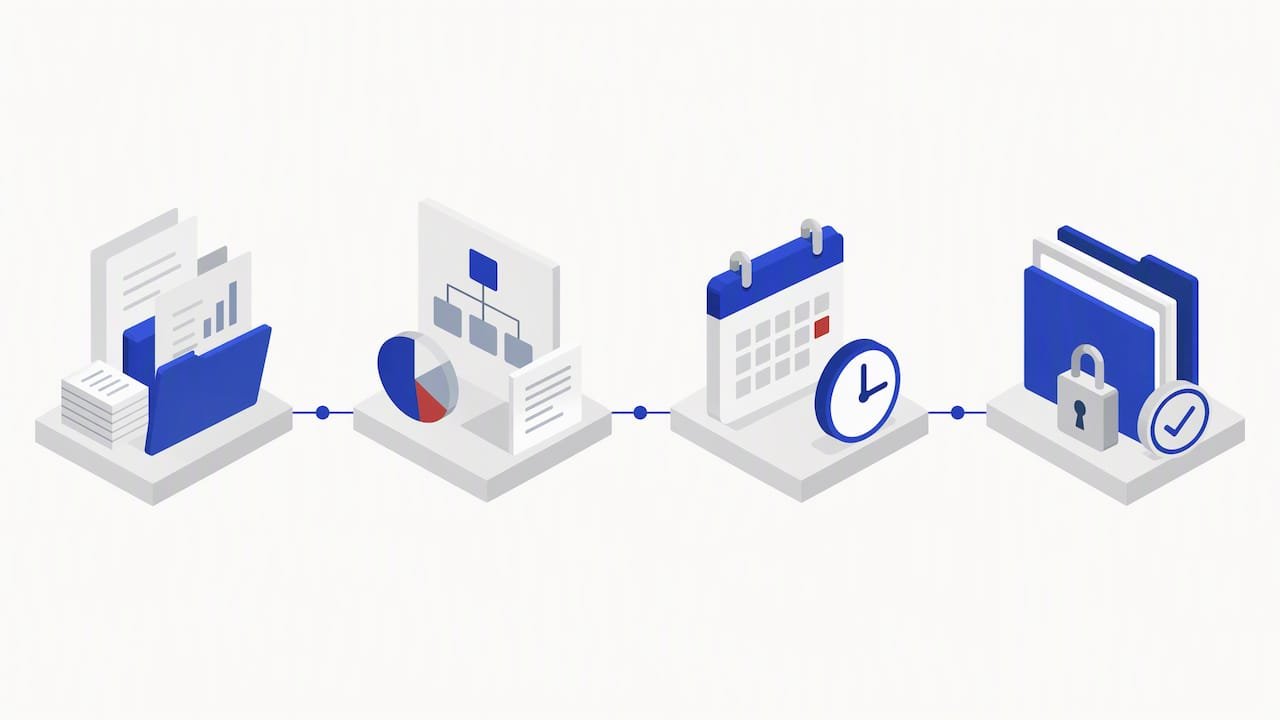
- Gather your source documents first. Collect intercompany agreements, invoices, contracts, financial statements and any existing transfer pricing policies.
- Map your related-party transactions. List every transaction type, the counterparties involved, and the jurisdictions concerned.
- Perform a concise functional analysis. Document the functions performed, assets used and risks assumed by each party, rather than relying on generic descriptions.
- Select and justify your transfer pricing method. Record why the chosen method fits the transaction, identify the tested party, and note any comparability adjustments made.
- Reconcile the analysis to your financial statements. Ensure the figures used in your documentation tie back cleanly to reported numbers, as this is often where discrepancies arise during review.
- Apply version control and date stamps. Every draft should carry a clear version number and completion date to satisfy the formal requirement under the Rules.
- Store files centrally and index them. A short document map speeds up production if IRAS requests the file within the 30-day window.
Pro Tip: Treat your transfer pricing file as a living document, updated each time a contract or pricing arrangement changes, rather than a once-a-year exercise.
A sensible timeline runs backwards from your filing due date. Begin gathering source documents at least two months ahead, complete the functional and method analysis before the filing deadline, and hold a finalised, date-stamped file ready for production at any point during the year. Our business tax computation guide is useful for cross-checking how your transfer pricing figures feed into your broader tax computation.
How a professional adviser helps, and where Bizsquare fits in
Preparing documentation internally is possible, but many finance teams find the comparability research, method selection and audit response work easier to manage with support. We provide corporate tax filing and advisory, along with IRAS audit support and dispute resolution, helping companies draft documentation, defend positions under review, and keep records aligned with current Rules. Our outsourced CFO services also support ongoing transfer pricing governance, not just a once-off filing exercise. We encourage you to review our service pages directly to confirm what fits your company’s specific situation.
Author perspective: practical priorities for Singapore finance teams
Contemporaneous documentation is a risk control, not paperwork for its own sake. Many finance teams treat it as a year-end task, which leaves little room to correct gaps before the filing deadline. Two priorities matter most right now: confirm whether your gross revenue or look-back position has shifted this year, and check that your intercompany agreements still describe what is actually happening operationally. Both can be done in an afternoon, and both reduce real exposure under audit.
Bizsquare services for transfer pricing compliance and next steps
Getting transfer pricing documentation right takes more than knowing the rules, it takes accurate books, properly drafted agreements and a tax team that can respond quickly when IRAS asks for files. We support Singapore companies across each of these needs, from the accounting records that underpin your analysis to the filing and audit response itself.

- Our accounting and bookkeeping services keep transactional records and financial statements accurate and ready to reconcile against your documentation.
- Our corporate tax filing and advisory team helps prepare compliant documentation and handle IRAS audit support and dispute resolution.
- Our outsourced CFO and corporate advisory services support documentation strategy and ongoing governance across financial years.
If you would like a straightforward view of where your company stands, reach out through our corporate tax filing and advisory page to arrange a consultation with our team.
This article is general information, not a substitute for advice from a qualified financial advisor. Consult a qualified financial professional about your own circumstances before acting on anything here.
FAQ
1.) Who should prepare transfer pricing documentation?
Companies whose gross revenue exceeds S$10 million for the basis period must prepare documentation for their related-party transactions. The obligation also continues under the look-back rule if documentation was required in the prior basis period, even if revenue later falls.
2.) Can you provide a sample transfer pricing documentation?
A full documentation set generally follows the Second Schedule structure under the Income Tax (Transfer Pricing Documentation) Rules 2018, covering group overview, functional analysis and the transfer pricing method applied. Rather than a generic template, your documentation should reflect your company’s actual transactions, contracts and comparability analysis.
3.) What is transfer pricing in Singapore?
Transfer pricing refers to the pricing of transactions between related parties, such as goods, services, loans or intangibles, which IRAS expects to be conducted at arm’s length. This means the pricing should reflect what unrelated parties would have agreed under comparable circumstances.
4.) What is the average salary for a transfer pricing manager in Singapore?
Salary figures for this role are not published in official Singapore tax or statistical sources, so no reliable figure can be stated here. Businesses seeking this information are better served checking current recruitment market data rather than regulatory guidance.
5.) How long must transfer pricing documentation be retained?
Documentation must be retained for at least five years from the end of the relevant basis period. This retention period applies regardless of whether IRAS has requested the documentation during that time.
Sources
- Transfer Pricing – Singapore
- Income Tax (Transfer Pricing Documentation) Rules 2018
- Transfer Pricing Country Profile – Singapore
Primary legislation and official guidance to consult
For verification beyond this guide, consult the primary sources directly. The IRAS transfer pricing guidance sets out the current administrative position, while the Income Tax (Transfer Pricing Documentation) Rules 2018 and the 2024 Amendment Rules provide the full statutory text on Singapore Statutes Online. The OECD country profile for Singapore offers an international reference point for how Singapore’s rules compare with broader standards.